
Last updated September 10, 2026
Full 25-point door and opener safety check with every visit - springs, cables, rollers, tracks, and your LiftMaster or Chamberlain opener included
You get a price before we start. It does not change when the truck arrives.
 Before
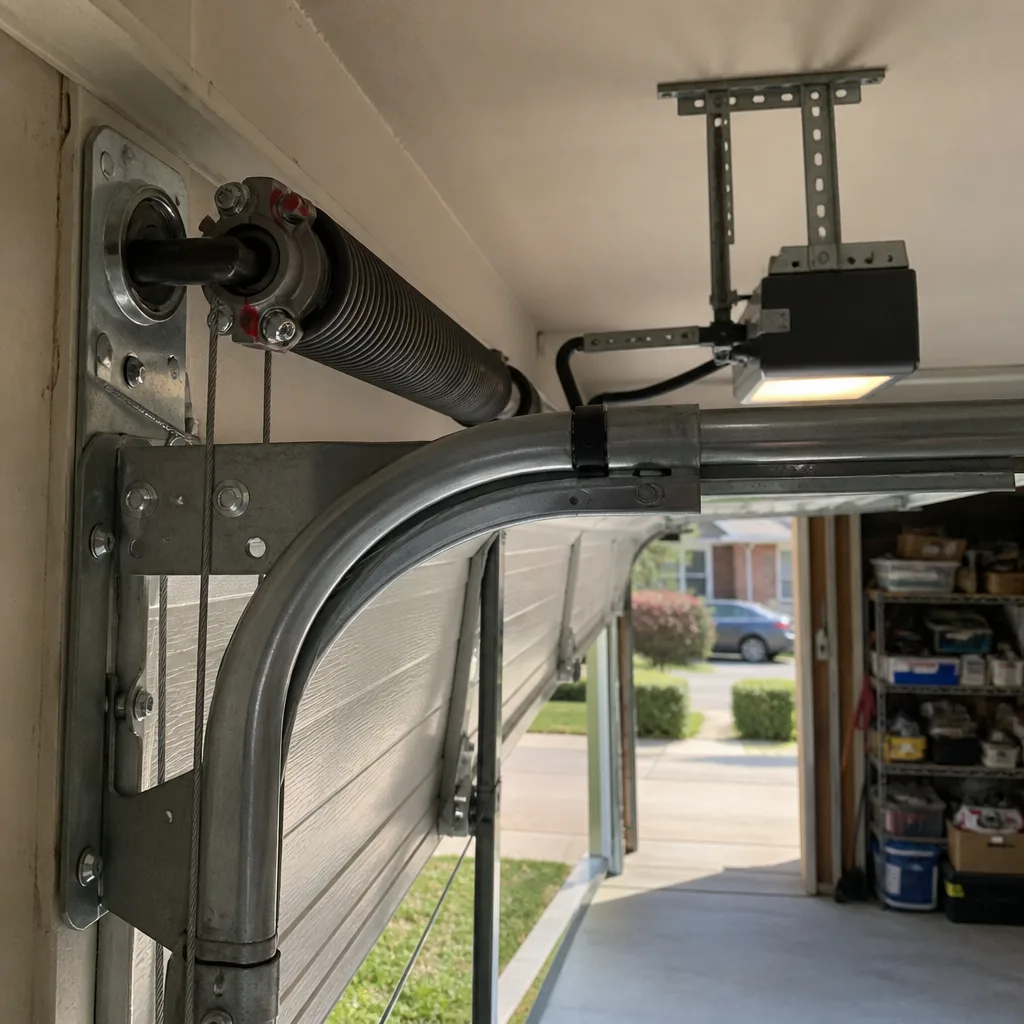 After
After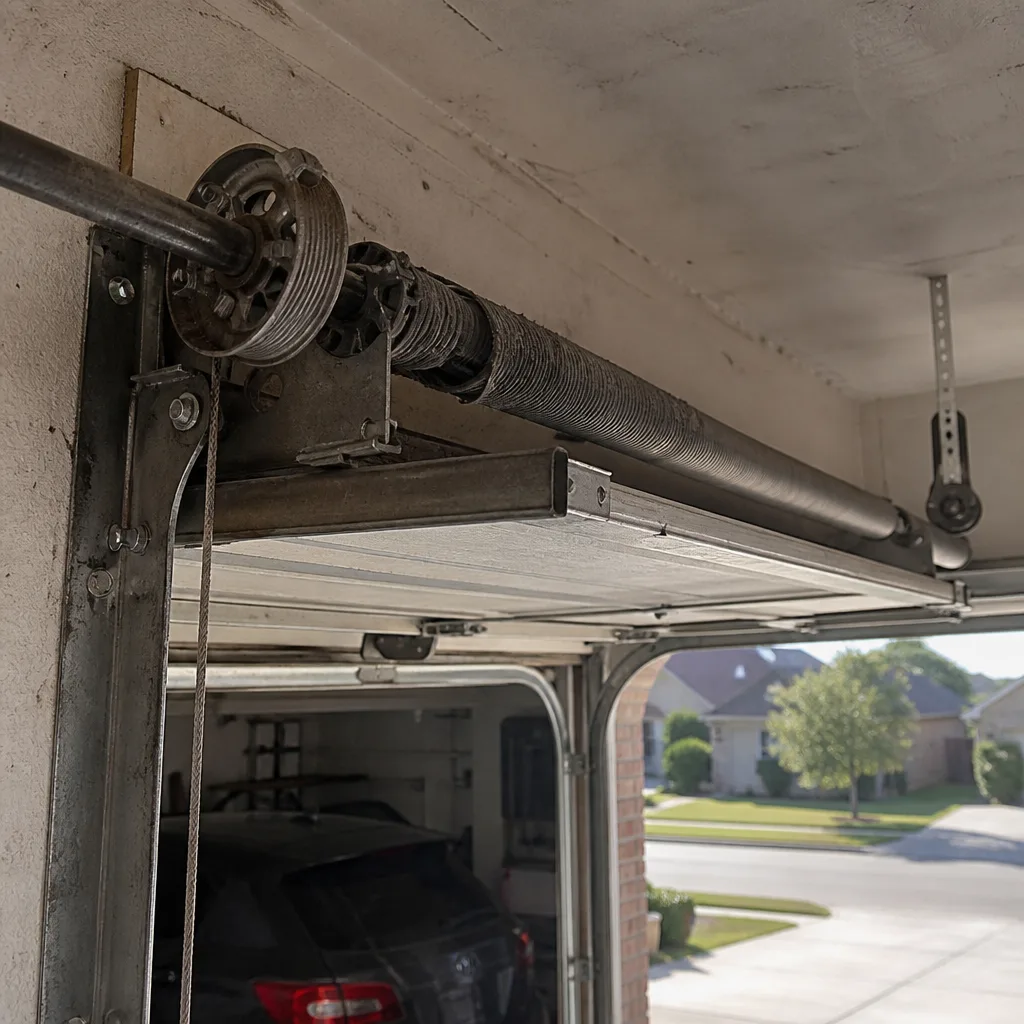 Before
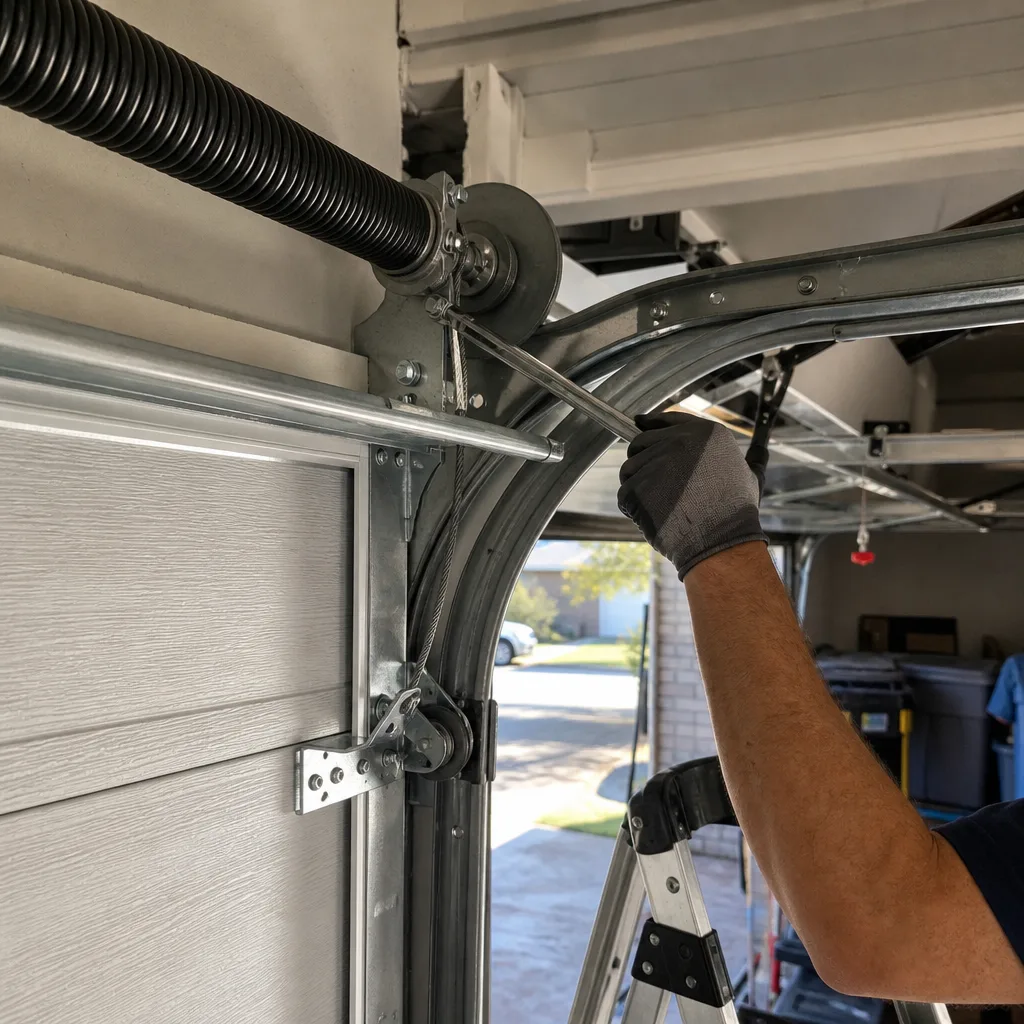 After
After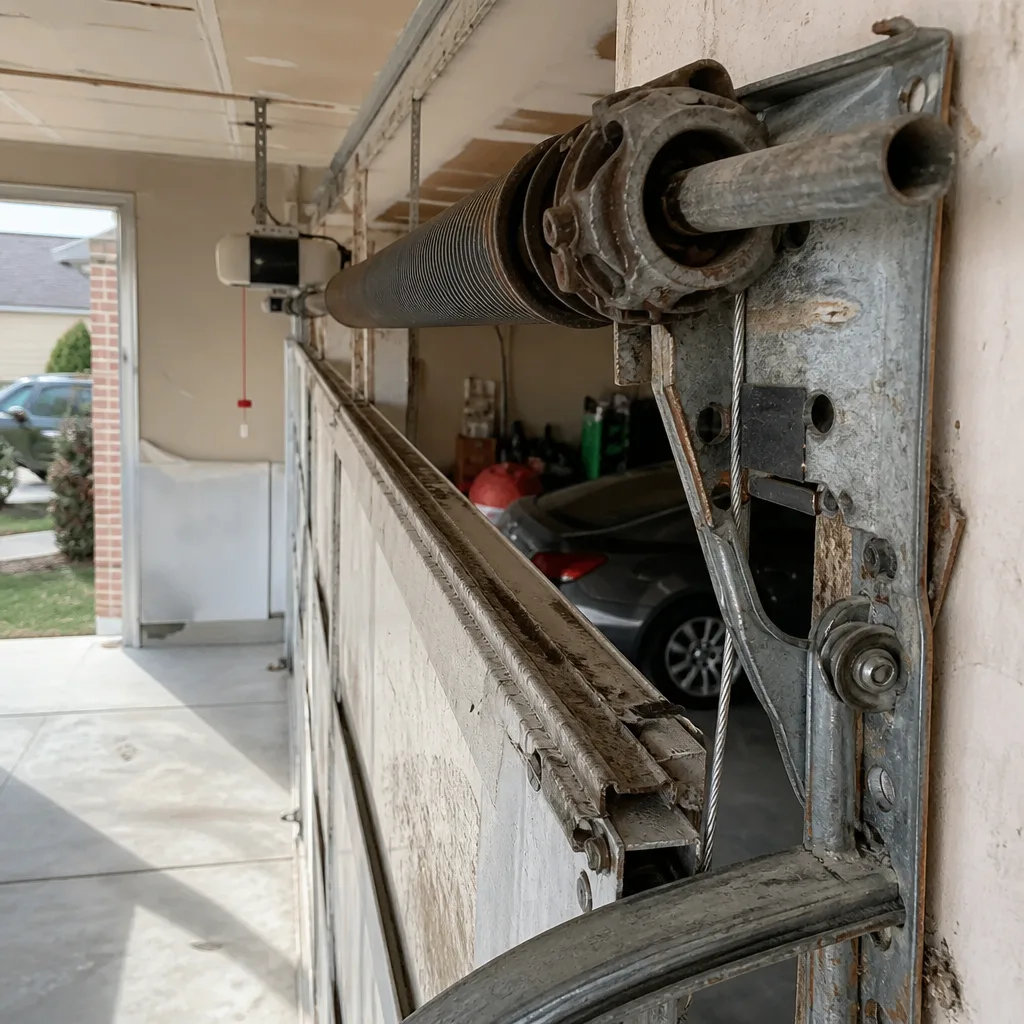 Before
 After
AfterThe Complete Guide to Garage Door in McKinney
Your garage door runs roughly 1,500 cycles a year. That’s more than your front door, your HVAC, and your dishwasher combined. Most McKinney homeowners don’t think about it until it stops at 7 a.m. on a Tuesday, the car is trapped inside, and the kids are late for school. This guide covers everything that matters about garage doors in this specific part of North Texas: the materials that survive our hailstorms, the springs that fail under our temperature swings, the openers that keep working when Oncor goes down, and the one decision that covers all of it. For related reading, see our DIY vs Professional Garage Door: The McKinney Homeowner’s Decision Guide. By the time you finish reading, you’ll know exactly what to buy, what to skip, and when to pick up the phone.
Quick Answer
A garage door in McKinney is the largest moving part of your house, and it needs three things to work right in this climate: a door built with thick enough steel to take a hailstorm, springs sized for the temperature swings between 20°F nights and 105°F afternoons, and an opener with battery backup so the door still works when the power goes out. Most doors on McKinney homes are either 24-gauge steel (thin, dent-prone, cheaper) or 25-gauge steel (slightly thicker, much more dent-resistant, worth the extra money here). Expect to budget $800 to $1,600 for a quality mid-range door installed, $180 to $340 for a spring replacement, and $450 to $900 for a new opener with battery backup, installed. See our Garage Door Cost Breakdown: The McKinney Homeowner’s Reference for 2026 for full details.
Table of Contents
- The Materials That Actually Survive McKinney Weather
- Spring Systems: What Breaks First and What It Costs
- Garage Door Openers: The One Feature That Matters in North Texas
- Insulation and R-Value: The Math That Saves You Money
- Why McKinney Clay Soil Stresses Your Door More Than You Think
- What Garage Door Work Actually Costs in McKinney in 2025
- A Simple Maintenance Routine That Adds Years to Your Door
- How to Buy a Garage Door Without Getting Burned
The Materials That Actually Survive McKinney Weather
McKinney sits at the intersection of three weather patterns that punish garage doors: spring hailstorms that can drop golf ball sized ice, summer heat that bakes a south facing door to 140°F by 3 p.m., and winter nights that dip below freezing enough times to make metal contract and wood warp. The door you’d install in Ohio is not automatically the door you should install here.
Steel is the most common material on McKinney homes, and for good reason. It’s the best combination of price, durability, and low maintenance. But not all steel is the same, and the one number you need to know is the gauge. Lower gauge means thicker steel, which is backwards from what most people expect. A 24-gauge door is the cheapest option most builders install. A 25-gauge door has thicker steel sheets, and that difference shows up after the first hailstorm. We’ve replaced dozens of 24-gauge doors on homes in Stonebridge Ranch and Craig Ranch that looked like golf balls hit them from ten feet away, while 25-gauge doors on the same streets came through with nothing but cosmetic dings you’d need a ladder to see.
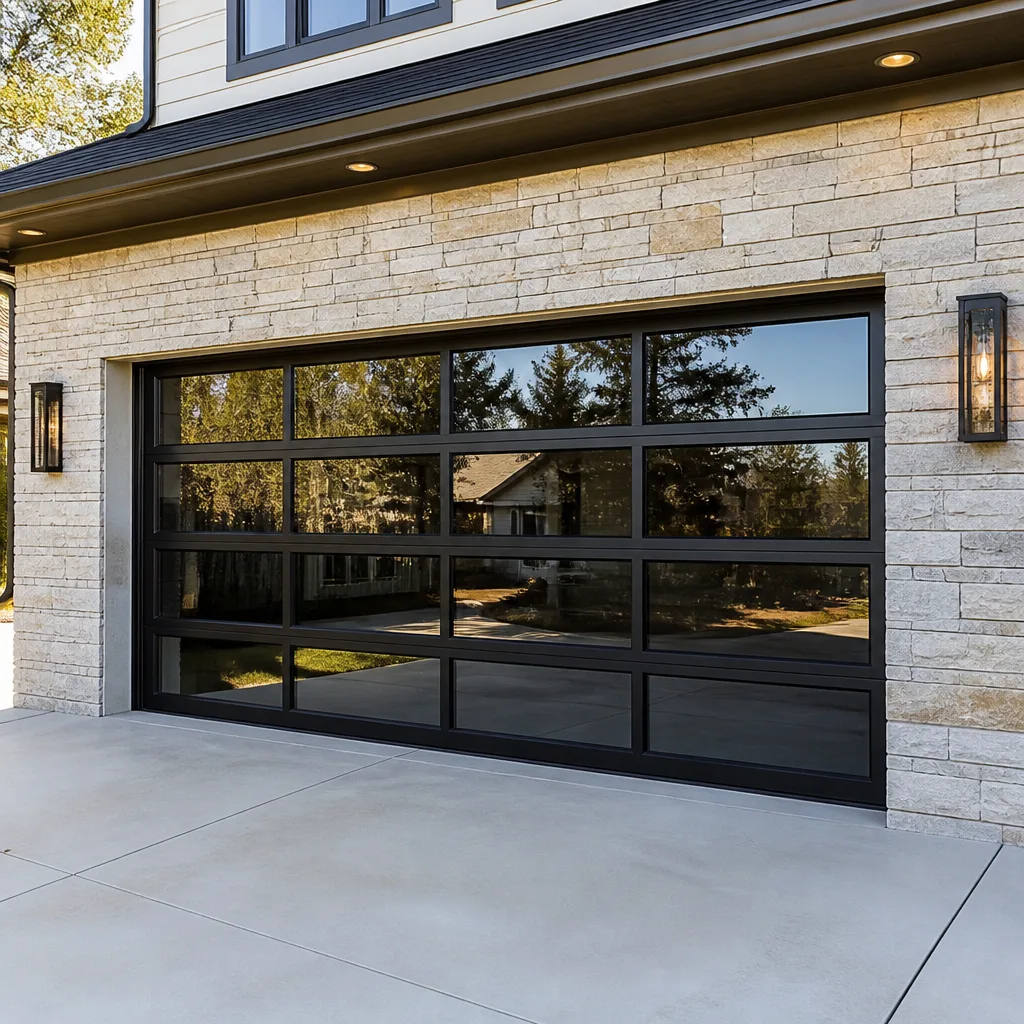
Aluminum doors with glass panels look sharp on modern homes, but they dent even more easily than 24-gauge steel and they conduct heat like a skillet. If you have an east facing aluminum door in McKinney, your garage is an oven by 9 a.m. from May through September. Wood doors are beautiful and they belong on certain homes, but they require real maintenance here: they expand and contract with our humidity swings, and if you skip sealing them every two years, the bottom panels soak up moisture and start to rot. We service wooden Amarr and Wayne Dalton doors all over McKinney’s historic district, and the ones that last are the ones whose owners treat them like a deck, not like siding.
One thing people don’t consider: the door’s color. Dark colors absorb heat. A black or dark brown garage door on a west facing wall in McKinney will reach surface temperatures hot enough to make the metal expand measurably, which adds stress to the hinges and rollers over time. Lighter colors reflect more heat and buy you a few extra years on the hardware. If you want a dark door, make sure the spring system and rollers are rated for the extra thermal load.
What We Recommend for McKinney Homes
- Steel, 25-gauge minimum. Thicker steel costs $150 to $300 more per door, and it’s the cheapest insurance against North Texas hail you’ll ever buy.
- Insulated core. Even a basic polystyrene core makes a real difference in both energy bills and noise. More on this below.
- Powder coat finish. A quality powder coat handles our UV exposure far better than standard paint and won’t chalk and fade in three summers.
- Nylon rollers. They cost a few dollars more than steel rollers and they’re dramatically quieter, which matters if your garage is under a bedroom or you sleep above it.
Spring Systems: What Breaks First and What It Costs
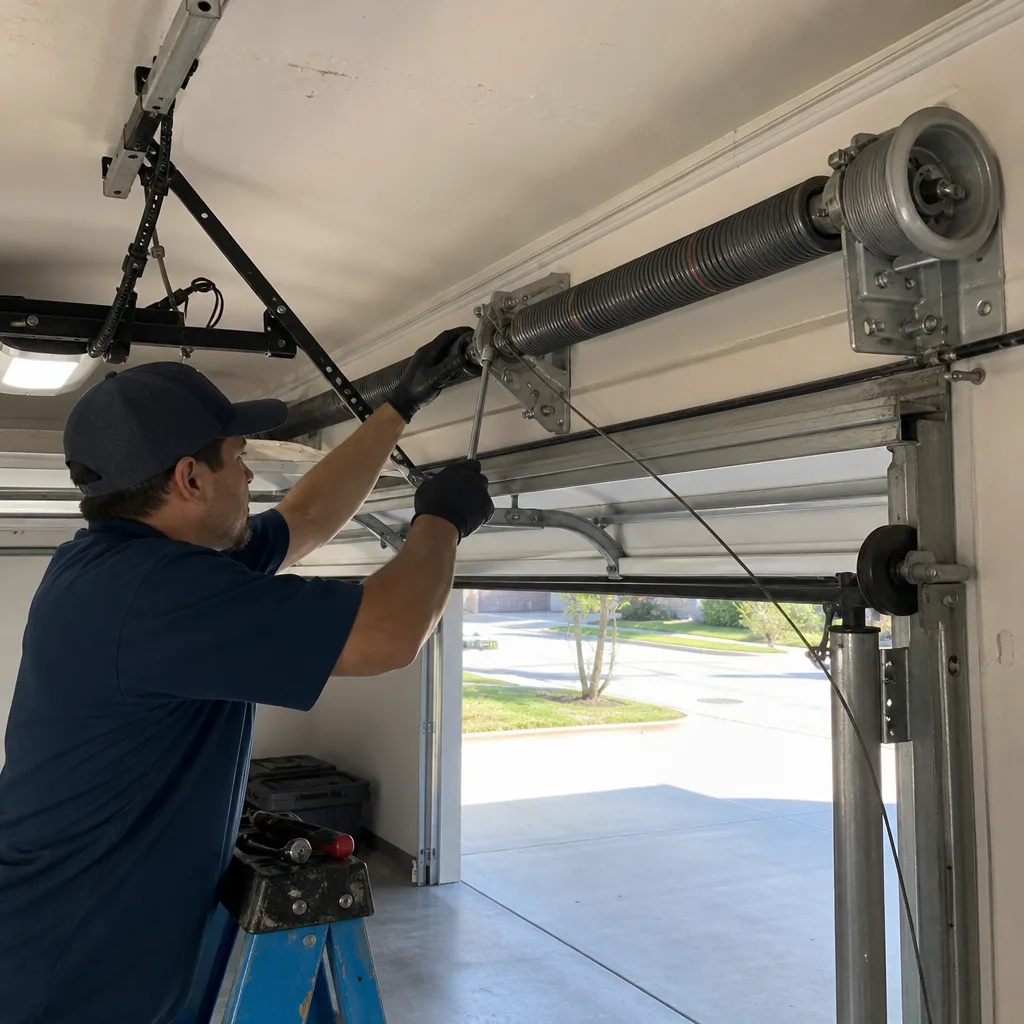
A garage door is 200 pounds riding on two springs. Respect it. The springs do all the lifting. The opener only guides the door up and down. If the springs are doing their job, a healthy adult can lift the door with two fingers. If the springs are shot, the door weighs what it weighs and no opener on Earth will move it safely.
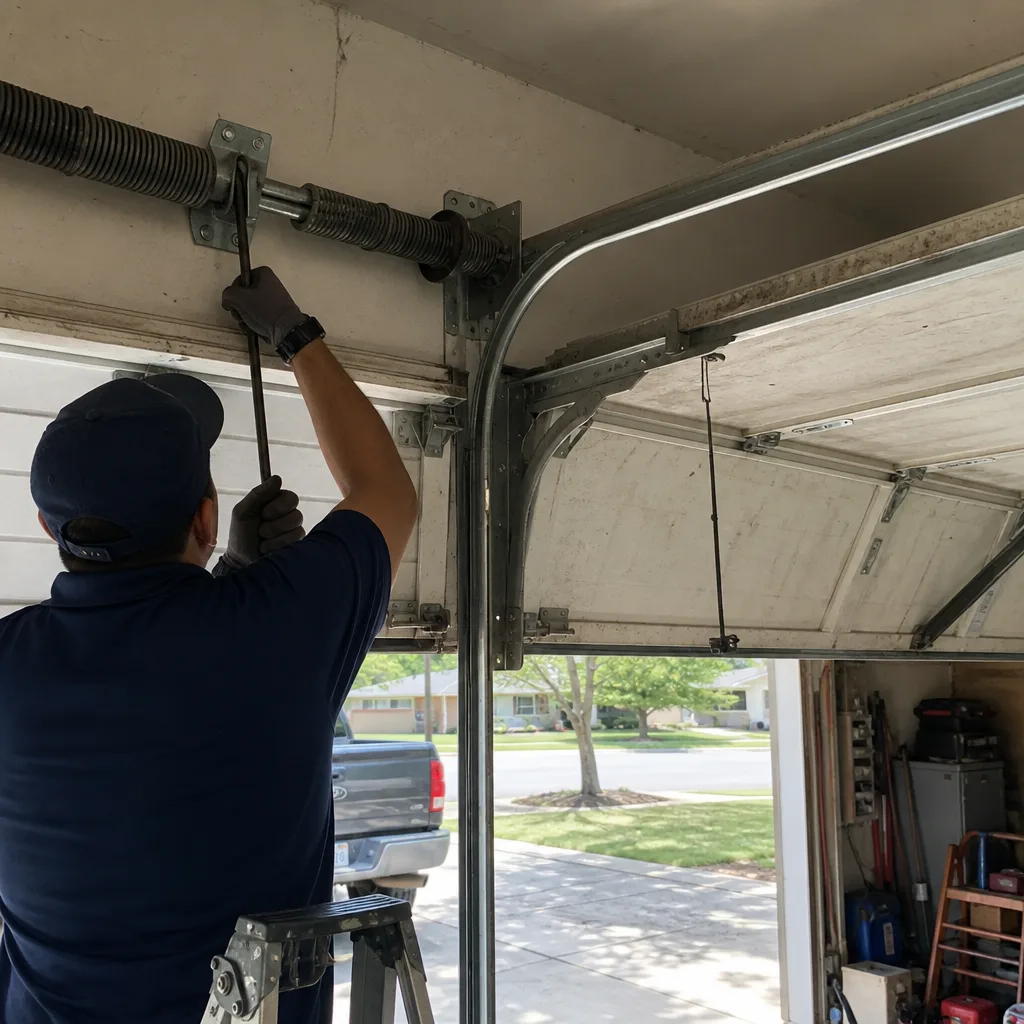
There are two spring systems you’ll find on McKinney garage doors. Torsion springs are the modern standard: they mount on a bar above the door, they wind up and store torque, and they’re what we install on every new door we put in. Extension springs are the older style: they stretch along the horizontal tracks on each side, they’re found on doors built before roughly the year 2000, and they fail more dramatically when they snap because they fly across the garage when they break.
Springs are rated in cycles. One cycle is one open and one close. A standard torsion spring from a big box store is rated for 10,000 cycles, which sounds like a lot until you do the math: 1,500 cycles a year means that spring is done in about six and a half years. We count spring cycles the way you count tire miles, and we can tell you what’s left on yours. The springs we stock are rated for 25,000 to 30,000 cycles, which translates to roughly 15 to 20 years on a McKinney home that uses the garage daily. They cost more upfront, but you replace them half as often.
In McKinney’s climate, springs fail most often in two windows: the first cold snap of winter and the first hot stretch of summer. Metal expands when it heats and contracts when it cools, and after enough years of those swings, the metal fatigues. When a spring breaks, it sounds like a gunshot in the garage. The door won’t open, or it opens a foot and slams back down. Do not keep trying the opener. Every attempt with a broken spring puts more stress on the opener and the other spring, and a door that binds halfway up can drop suddenly.
Spring Replacement Cost in McKinney
- Single torsion spring replacement: $180 to $280 installed, depending on the spring’s wire size and cycle rating.
- Double torsion spring replacement: $280 to $340 installed. Always replace both springs even if only one broke, because the other one has seen the same number of cycles and will fail soon.
- Extension spring replacement: $150 to $220 installed, including safety cables.
- High-cycle spring upgrade: Add $60 to $100 total for springs rated at 25,000+ cycles instead of the standard 10,000.
Here’s the thing we tell every McKinney homeowner: this is not a DIY job. Torsion springs are wound under enough tension to remove fingers, break wrists, or worse if the winding bar slips. A trained professional has the right bars, the right technique, and the right respect for the stored energy. If you need a hand, garage door repair in McKinney is one call away, and we quote the job on the phone and hold that price at the door.
Garage Door Openers: The One Feature That Matters in North Texas
The most important feature on a garage door opener in McKinney is not horsepower, not smart home integration, not the app. It’s battery backup. When a North Texas thunderstorm or ice storm or August grid strain knocks out power, your garage door is useless without it. Your car is trapped inside, or worse, it’s stranded outside and the garage is the only way in without keys. Oncor outages in McKinney last anywhere from a few hours to a few days depending on the storm, and every year we get calls from homeowners who couldn’t get their car out for work on Tuesday morning because the opener went down with the grid.
Battery backup adds about $80 to $120 to the cost of an opener, and it works exactly like it sounds: a 12-volt battery inside the opener keeps it running for anywhere from 20 to 50 cycles after the power dies, depending on the brand. LiftMaster and Chamberlain are the two brands we see perform most consistently in McKinney during outages. Genie makes solid battery backup units too. The feature is standard on most mid-range and above openers now, but you still have to check the box, because plenty of budget models skip it to hit a lower price point.
Beyond battery backup, consider these factors when choosing an opener:
- Drive type: Belt drive is the quietest and the best choice if your garage is attached or under living space. Chain drive is cheaper but loud. Screw drive is rare now and finicky in temperature extremes.
- Horsepower: For a standard double door, you want at least 1/2 HP, and we prefer 3/4 HP for anything insulated or wider than 16 feet. For a single door, 1/2 HP is plenty.
- Safety sensors: These are mandatory by federal law and they’re on every opener sold. They’re the eyes that stop the door if anything crosses the beam. Test them monthly.
- Wall console location: Put the control panel near the door to the house, not the garage door itself. You want to be able to tap the button as you walk into the house without walking back into the garage.
If your opener is straining, the problem is almost never the opener. A motor that’s loud, jerky, or slow is usually fighting a door that’s out of balance, off track, or has failing springs. Before you replace an opener, have the door itself checked. Swapping the opener without fixing the underlying issue means you’ll wear out the new opener in a year or two. For more detail, see our full guide on garage door opener service in McKinney.
Insulation and R-Value: The Math That Saves You Money
Here’s the simple math on garage door insulation in McKinney. If your garage is attached to your house and shares a wall with living space, an uninsulated garage door acts like an open window on that wall. The garage bakes in summer and freezes in winter, and your HVAC system works overtime through the shared wall. An insulated door with an R-value of 9 to 13 cuts that heat transfer dramatically. If your garage is detached and you don’t spend time in it, insulation matters less for your energy bill and more for your comfort when you’re in there working.
The R-value on a garage door measures thermal resistance: higher is better. Here’s what the numbers mean in practice:
- R-0 to R-3: Uninsulated or single layer steel. The inside of the door is the same temperature as the outside. Bad choice for attached garages in McKinney.
- R-6 to R-9: Polystyrene insulation, the white foam board you’re used to. Good enough for a detached garage or a garage that’s mostly storage. Cuts the heat noticeably.
- R-12 to R-18: Polyurethane insulation, sprayed in and bonded to the panels. Best choice for attached garages, garages under bedrooms, or garages converted to workshops. The door feels solid, sounds quieter, and holds temperature well.
- R-18+: Premium doors, usually from Clopay or Amarr, with thick polyurethane cores. Overkill for most McKinney garages unless it’s a conditioned space.
One factor people overlook: the weatherstripping around the door matters as much as the door itself. A door with great insulation and rotten bottom seals leaks air at the floor and the sides. In McKinney, bottom seals dry out and crack in the summer heat, and when they do, you’re heating and cooling the neighborhood. Replacing the bottom seal is a $40 to $80 job that pays for itself in a season. Check yours: if daylight is visible under the closed door, it’s time.
How to Pick the Right R-Value for Your Garage
- Detached garage, storage only: R-6 to R-9 is fine. Don’t overspend.
- Attached garage, wall shared with the house: R-12 minimum. The shared wall is where you’ll feel it.
- Garage under a bedroom: R-12 to R-16, plus a belt drive opener. Your sleep depends on it.
- Converted workshop or gym space: R-16 or higher, and consider a mini split for the space itself.
- Garage with a water heater or HVAC unit in it: R-12 minimum. Those units work less efficiently in temperature extremes.
Why McKinney Clay Soil Stresses Your Door More Than You Think
McKinney sits on expansive clay soil, the same black soil that cracks foundations and shifts fence posts across Collin County. The soil swells when it rains and shrinks when it dries, and it moves the concrete slab under your garage with it. A slab that shifts even a quarter of an inch changes the geometry of the door opening, and the tracks mounted to the walls and ceiling follow. The result: a door that was perfectly balanced six months ago is suddenly binding, sticking, or scraping on one side.
We see this most often in neighborhoods east of Highway 75 where the clay runs deep: homes in Prosper, Celina, and the north edges of McKinney report more track misalignment than homes on the rockier soil west of town. The fix is rarely dramatic. Usually it’s re-shimming the tracks, adjusting the brackets, and re-balancing the springs. But if you ignore it, the door wears unevenly: rollers flatten, hinges stress, and the opener motor burns out early from fighting the imbalance.
Here’s the sequence to watch for, and what to do at each step:
- The door makes a scraping sound on one side. This is the first sign of track misalignment. Call a professional to re-align the tracks. Ignoring it wears the rollers flat.
- The door slows down at a certain point in its travel. The door is binding. The opener is being asked to work harder than it was designed to. This shortens opener life every cycle.
- The door reverses before it hits the floor or won’t close all the way. The safety sensors may be out of alignment, or the door itself is out of square with the opening. Don’t adjust the sensors as a first step; check the tracks and the door’s balance.
- The door sits unevenly on the floor: one side touches, the other gaps. The door panels or the tracking have shifted. Left alone, the bottom seal wears unevenly and you lose the weather seal.
What Garage Door Work Actually Costs in McKinney in 2025
We quote every job on the phone before we leave the shop, and we hold that price at the door. For more guides & resources, visit our blog. Here’s what work actually costs in McKinney right now, based on what we see across the county. These are real numbers for the Collin County market in 2025, not national averages from a website. Prices vary by door size, style, and condition, but this gives you a straight answer.
| Job | Typical McKinney Price Range | Notes |
|---|---|---|
| Spring replacement (both springs) | $280 to $340 | High-cycle springs add $60 to $100 |
| Single spring replacement | $180 to $280 | If only one breaks, we still recommend both |
| Cable replacement | $120 to $200 | Cables snap when springs fail or tracks bind |
| Track realignment | $100 to $180 | Common after clay soil shifts the slab |
| Roller replacement (full set) | $80 to $150 | Nylon rollers are worth the upgrade |
| Opener replacement with installation | $450 to $900 | Includes battery backup; belt drive is the top end |
| New door, builder grade | $800 to $1,100 | 24-gauge steel, basic panels, minimal insulation |
| New door, mid-range | $1,100 to $1,600 | 25-gauge steel, insulated, better finish |
| New door, premium | $1,800 to $3,500 | Custom designs, wood-look, max insulation |
| Bottom seal replacement | $40 to $80 | Cheap fix for big energy savings |
| Emergency service (evening/weekend) | Standard rates plus a small trip fee outside normal hours | A live person answers 24/7 and quotes on the call |
Notice that the price is quoted and agreed before any work starts, and it does not change between the phone and your driveway. That’s not a line. That’s how we’ve worked since 2004, and it’s why homeowners in McKinney keep our number on the fridge. You’ll also find active offers that make this more affordable: we currently have $40 off any repair over $200, a free second opinion on any written estimate, and no trip charge inside the county. Seniors and veterans get 10% off, always. For a full breakdown of what repair work involves and costs, see garage door repair in McKinney.
A Simple Maintenance Routine That Adds Years to Your Door
Most garage doors in McKinney die early from neglect, not from bad materials. The good news: 20 minutes twice a year is enough. Spring is the most important time to do this because the hail and storm season is coming, and you want the door working when you need it most. Fall is the second checkpoint, before the cold snaps start cycling the metal.
Here’s the routine we recommend to every McKinney homeowner, and it costs less than $20 in materials:
- Listen to the door open and close. A healthy door is quiet or has a steady, even hum. Grinding, scraping, popping, or jerking means something is wrong. Don’t ignore it.
- Check the balance. Pull the emergency release handle and lift the door by hand. It should lift smoothly and stay open at waist height without dropping or springing up. If it drops, the springs are weak. If it stays, the springs are fine. Re-engage the opener after this test.
- Inspect the rollers, hinges, and cables. Look for flattened rollers, loose hinge screws, and fraying cables. Cables that look frayed should be replaced immediately, not “next month.”
- Check the bottom seal. Close the door and look for daylight. Replace the seal if you see any gaps, which is common after a McKinney summer dries out the rubber.
- Lubricate the moving parts. Use a silicone or lithium spray on the rollers, hinges, and springs. Do not use WD-40; it’s a cleaner, not a lubricant, and it attracts dust. A few seconds per roller is enough.
- Test the safety sensors. With the door open, wave something in front of the sensor and press the close button. The door should not close or should reverse. If it closes anyway, fix this immediately; it’s a safety hazard.
- Clean the tracks. Wipe the inside of the tracks with a dry rag. Do not grease the tracks; clean and dry is correct. Grease in the tracks collects grit and grinds away the rollers.
If any step in this routine reveals a problem, don’t wait. A $30 roller replacement done now is a $300 opener replacement in a year. And if you’re not comfortable doing any of this yourself, call us. We’ll do a full 21-point inspection and tell you exactly what’s left on your springs, rollers, and opener. No charge for the estimate.
How to Buy a Garage Door Without Getting Burned
McKinney homeowners get burned on garage door purchases in predictable ways. The national chains send a salesperson who quotes one number on the phone, shows up, and “discovers” problems that triple the bill. The fly-by-night guy undercuts everyone, installs the cheapest door he can find, and disappears when it breaks in 14 months. Here’s how to avoid both, based on two decades of watching this happen in our county.
First, ask who’s actually doing the work. A chain’s name on the side of the van usually means a subcontracted crew whose boss you’ll never meet. A local owner-operator means the name on the van is the name on the invoice and the name on the license. Otto Reinhardt lives in this county. If your door fails, you’ll see him again at the feed store, and he knows that. That’s leverage for you, not a liability for him.
Second, get the price in writing before you say yes, and make sure it’s the price you’ll pay at the end. We quote on the phone, write the quote on the invoice before work starts, and the price doesn’t change. If a company won’t give you a written price before the work, walk away.
Third, ask about the warranty in plain language. “Lifetime warranty” almost always means “lifetime of the parts, but you pay labor after year one.” Our guarantee is simpler than that: if it’s not done right, we make it right, within 90 days, in writing, on every invoice, and one call to Otto brings him back. No runaround, no customer service queue.
Fourth, check the license and the address. A published address and license number any homeowner can verify before the truck arrives is the minimum bar. If the company has no physical address in the county, or the phone routes to a call center in another state, you already know what to expect.
For a full walkthrough of what to look for when buying and installing a new door, see garage door installation in McKinney. And if you’re on the fence about whether to repair or replace, call us. We’d rather tell you honestly that your old door has five more years in it than sell you a door you don’t need. That’s how you keep a customer for 20 years.
Common Mistakes to Avoid
- Ignoring a slow or jerky door. A door that moves unevenly is telling you something. We hear from McKinney homeowners every week who “wished they’d called sooner” after a we-told-you-so spring snapped at 9 p.m.
- Buying the cheapest opener without battery backup. Skipping that $100 feature means a dead door every time the power goes out, and North Texas power does go out. Ask us about which brands our customers have trusted through the last few ice storms.
- Lubricating the tracks. This is the most common DIY mistake we correct. Greasy tracks collect grit and eat rollers. Clean and dry is the rule for tracks; lubricant goes on rollers, hinges, and springs only.
- Going with 24-gauge steel to save $200. The first McKinney hailstorm will cost you a new door or a lifetime of dents. Spend the $200. You’ll forget the price in a month, but the dents will remind you every time you pull in.
- Replacing the opener when the door is the problem. We covered this above, but it deserves repeating because it’s the most expensive misunderstanding in the garage door world: a straining opener is usually a symptom, not the disease.
- Not replacing extension springs with torsion springs when you have the chance. If you have an older door with extension springs and one fails, upgrade to a torsion system. It’s safer, smoother, and lasts longer. Doing it at failure time costs less than doing it later.
- Skipping the free second opinion. If you’ve got a written estimate from another company and you’re not sure about it, get a second set of eyes. We offer a free second opinion on any written estimate with no trip charge inside the county. Worst case, you confirm the first quote. Best case, you save real money.
When to Call a Professional
Call a professional when the springs break. Call when the door falls off its tracks. Call when a cable snaps. Call when the door reverses for no reason and you can’t figure it out in five minutes. Call when you see water damage at the bottom of the panels, because that means the seal failed and the panels are already wicking moisture. Call when the door is more than 15 years old and you want to know what’s left in it. Call when you’re not sure, and you’ll get a straight answer either way. Otto’s Garage Door offers free estimates in McKinney. Call (945) 777-4688 and a live person will pick up, day or night. If Otto answers, you’re already talking to the guy who’ll stand behind the work.
Frequently Asked Questions
A new garage door in McKinney typically costs $800 to $1,600 installed for a mid-range steel door, with builder-grade doors starting around $800 and premium custom doors running $1,800 to $3,500 or more. The price depends on the door’s size, steel gauge, insulation level, and style. We quote the full price on the phone and hold it at the door, and installation from a professional crew takes about four to six hours. Call (945) 777-4688 for an exact quote on your specific door.
A standard torsion spring rated for 10,000 cycles lasts about 6 to 7 years on a McKinney home that uses the garage daily, because that’s roughly 1,500 cycles per year. High-cycle springs rated for 25,000 to 30,000 cycles last 15 to 20 years. In our experience, McKinney’s temperature swings between 20°F and 105°F shorten spring life measurably compared to more moderate climates. When one spring breaks, we always recommend replacing both, since the other has seen the same number of cycles.
Yes. A broken torsion spring is one of the most common same-day repairs we do in McKinney. We stock springs across the full range of sizes on the truck, so in most cases the replacement is done in under two hours from arrival. If it’s an emergency and your car is stuck inside, call (945) 777-4688 and a live person will answer, quote the job on the spot, and get you scheduled.
Yes, without question. McKinney winters bring ice storms that have knocked out power for days at a time in recent years, and summer thunderstorms do the same on shorter notice. A battery backup opener keeps working for 20 to 50 cycles after the grid goes down, which means you can still get your car out and in when you need to. It’s an $80 to $120 upgrade on most models, and it’s the feature our customers thank us for most often.
Gauge is measured backwards: a 24-gauge steel door is thinner than a 25-gauge steel door. In practical terms on a McKinney home, the 25-gauge door resists hail dents significantly better and feels more solid when it operates. The price difference is roughly $150 to $300 per door, and given how often North Texas storms roll through Collin County, we consider 25-gauge the smart minimum for homeowners planning to keep their home more than a few years.
No. We quote the job on the phone before we leave the shop, and we write that price on the invoice before any work begins. The price quoted is the price you pay, period. If we find something else that needs attention once we’re there, we’ll show you, explain it, and give you a written price for that work separately, with zero pressure to say yes. That’s been our policy since 2004, and it’s why our customers keep our number.
The Bottom Line
Your garage door is the largest moving part of your house, the first thing a buyer sees, the first thing a burglar checks, and the first thing a McKinney hailstorm tests. Treat it with respect and it will serve you for 20 years. Ignore it and it will fail exactly when you need it most. The skills that matter in this climate are these: 25-gauge steel or better, torsion springs rated for high cycles, a battery backup opener, an R-value matched to your garage setup, and a simple maintenance routine you actually do twice a year. Find a local company with a published address, a license number you can verify, a written guarantee, and a name you’ll see again at the hardware store. Ask anyone on your street. We’ve been in this county since 2004, and Otto is a palindrome: reads the same from either end, same as the door.
For everything else, Otto’s Garage Door home is the starting point. We’re local, we answer the phone, and we stand behind the work.
Written by Otto Reinhardt, Owner at Otto’s Garage Door, serving McKinney since 2004.