

Last updated September 10, 2026
Full 25-point door and opener safety check with every visit - springs, cables, rollers, tracks, and your LiftMaster or Chamberlain opener included
You get a price before we start. It does not change when the truck arrives.


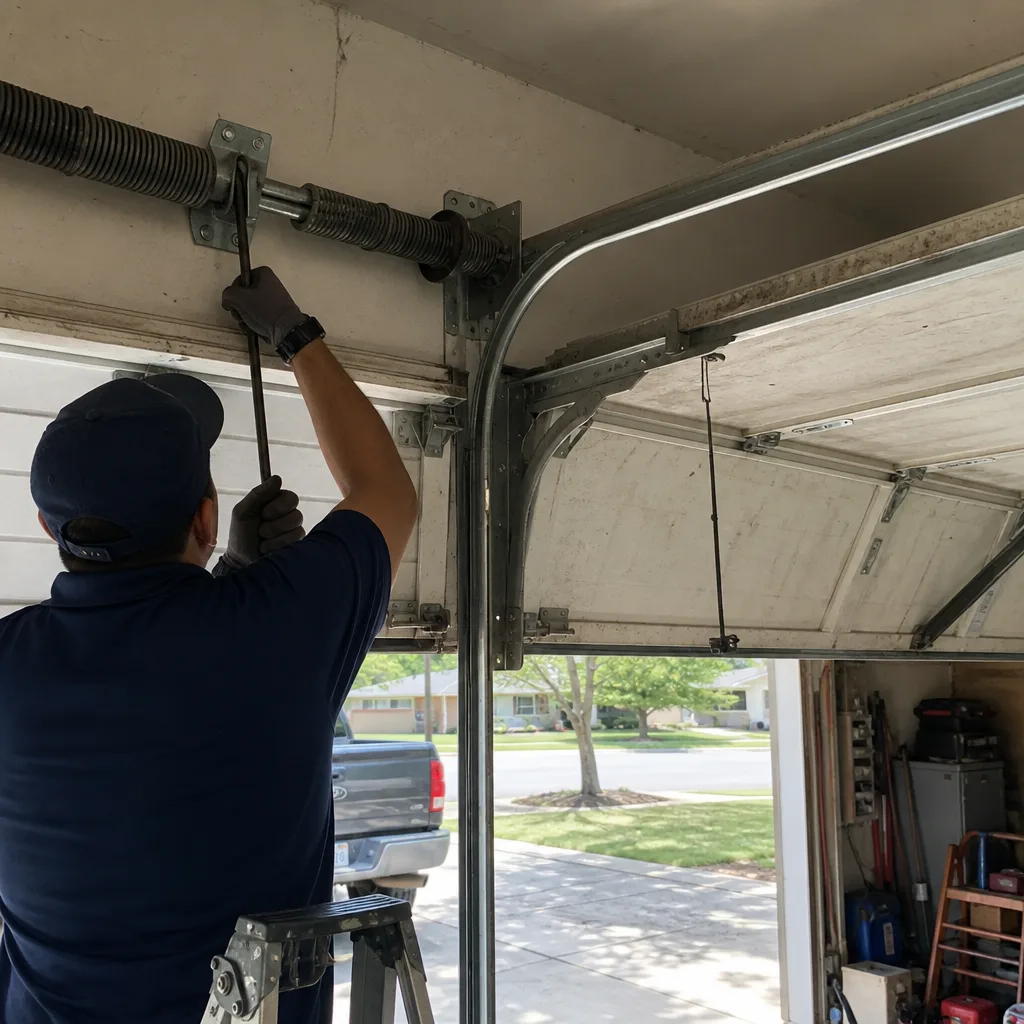 Before
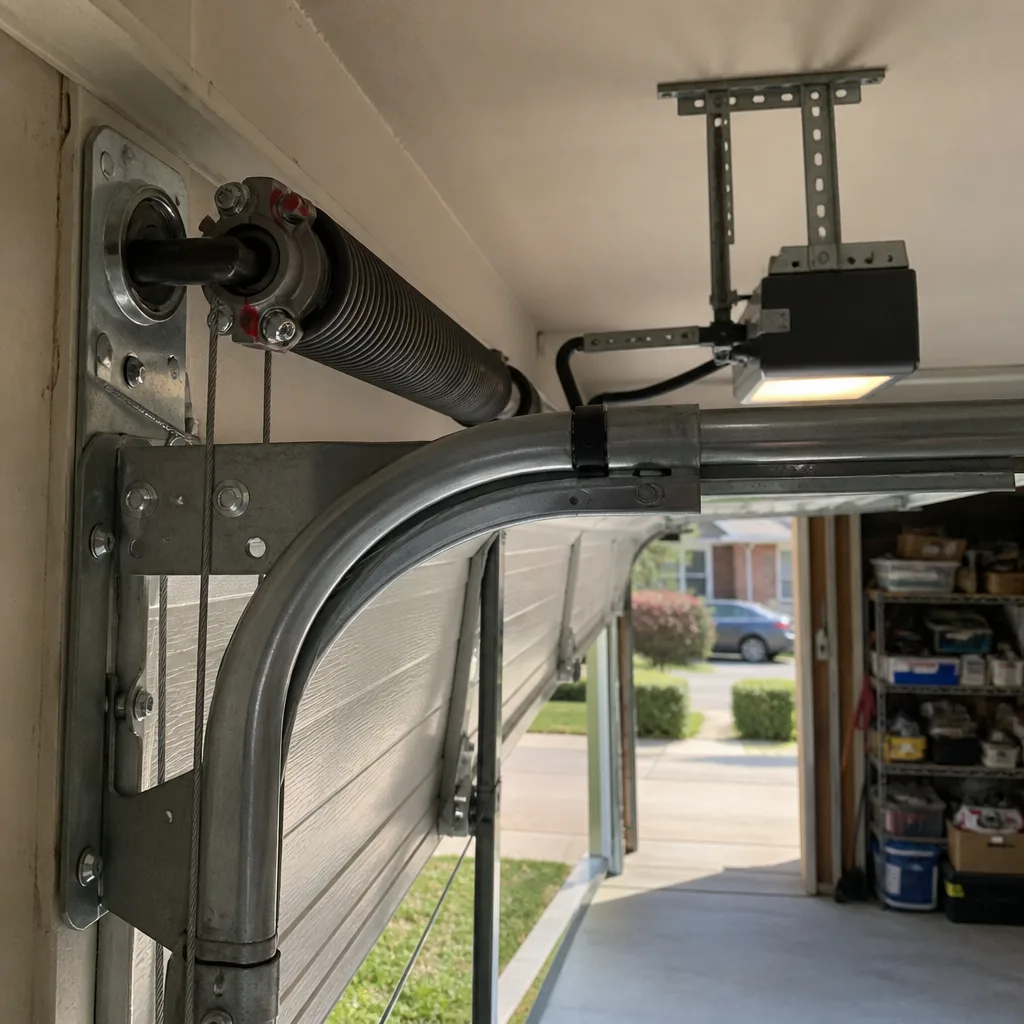 After
After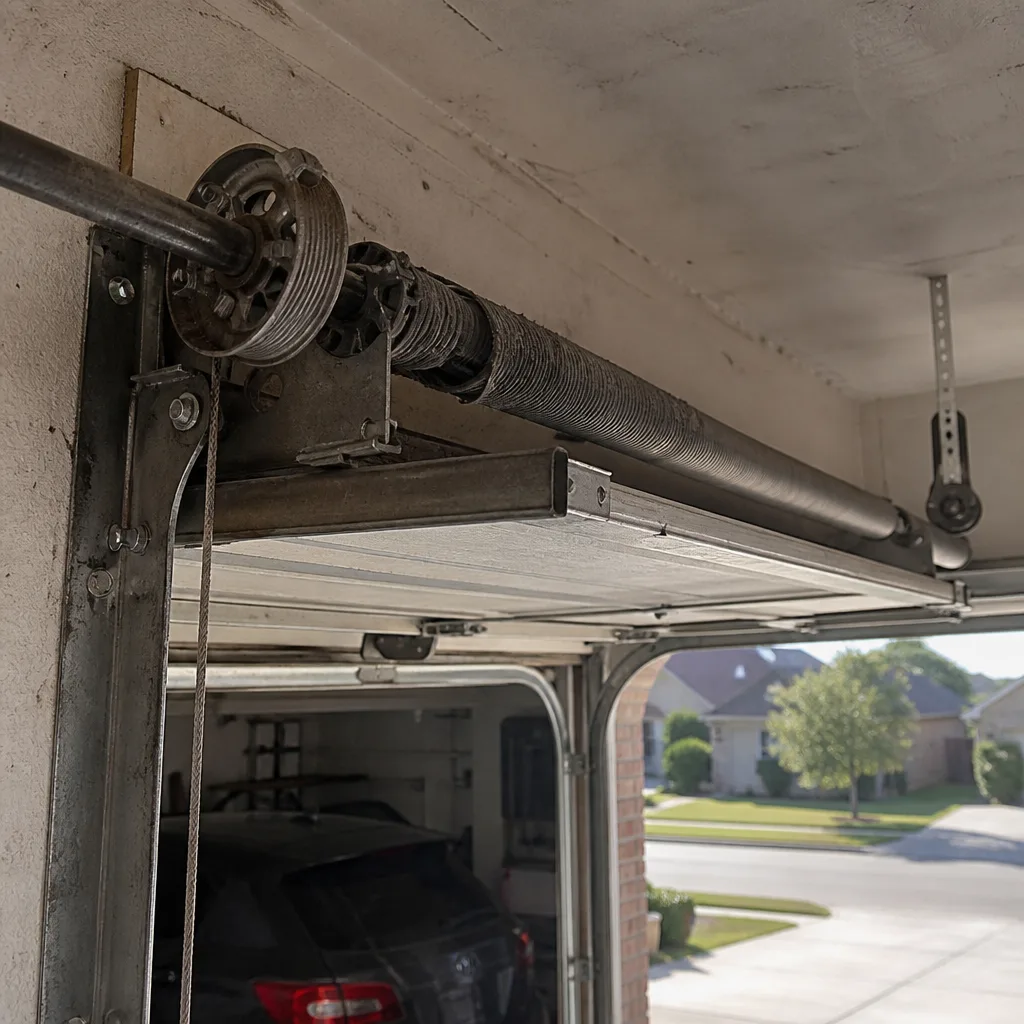 Before
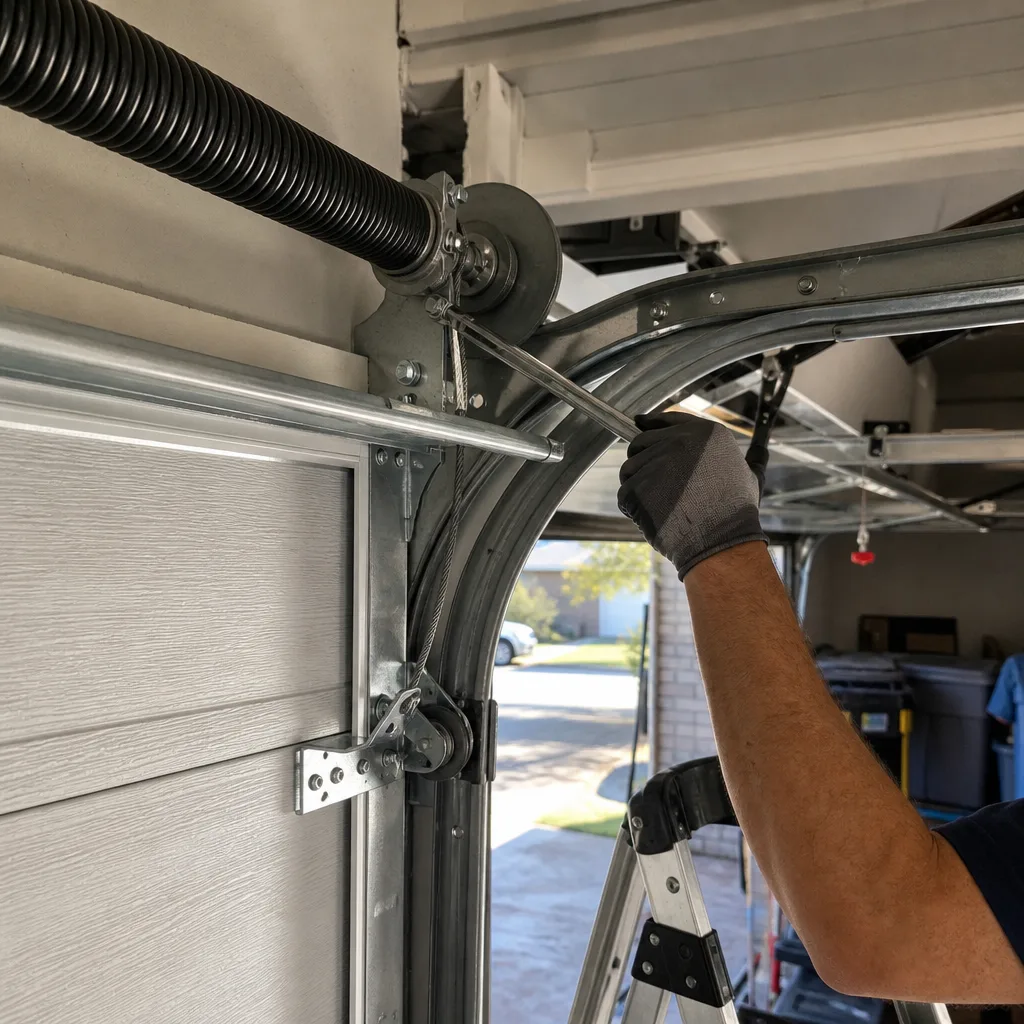 After
After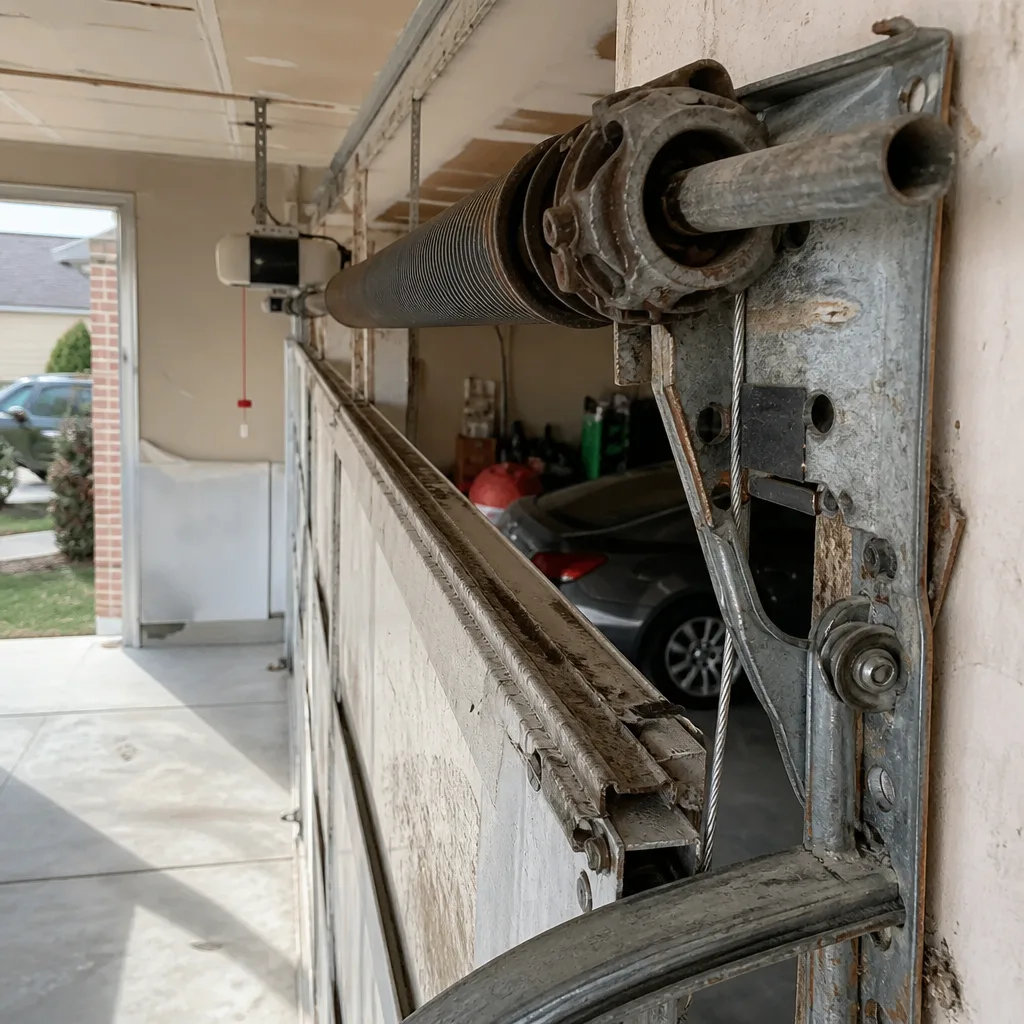 Before
 After
AfterGarage Door Repair Maintenance Checklist for McKinney Homeowners
The number-one call Otto gets isn’t a broken spring or a dead opener. It’s a cable that snapped because the bottom bracket was loose for a year and nobody caught it on a routine walk-around. A garage door weighs somewhere between 150 and 250 pounds, and every one of those pounds rides on components that wear down in McKinney’s heat, dust, and hard-freeze cycles. This checklist isn’t a generic national template. It’s built for Collin County conditions, and it tells you exactly what to look for, what it sounds like, and what it costs you if you ignore it another six months.
Quick Answer
A garage door maintenance checklist for McKinney homes means checking the balance, rollers, cables, hinges, and safety reverse every month; lubricating moving parts with white lithium grease every six months; and using McKinney’s spring and fall shoulder seasons as reminders to test the auto-reverse with a 2×4 and inspect cables for fraying before summer heat or winter cold puts stress on the system. Most homeowners can handle the visual checks themselves, but anything involving springs, cables under tension, or a door that fails the reverse test needs our Garage Door Repair services before it becomes a bigger bill.
Table of Contents
- The Monthly Walk-Around: What to Check in Under 10 Minutes
- McKinney Season Guide: What to Do Before Summer Heat and After the First Freeze
- How to Test Auto-Reverse Safety with a 2×4 (and Why It’s a Code Issue, Not a Suggestion)
- White Lithium Grease vs. WD-40: One Is Maintenance, One Is a Mistake
- How to Spot Cable Fraying Before It Snaps
- The Decibel Test: What Your Door Should Sound Like vs. What Grinding, Popping, and Squealing Mean
- Counting Spring Cycles: The Maintenance You Can’t See
- Common Mistakes to Avoid
- When to Call a Professional
- Frequently Asked Questions
- The Bottom Line
The Monthly Walk-Around: What to Check in Under 10 Minutes
Before we get into seasons and techniques, here’s the basic rhythm. Once a month, when you bring the trash bins in or grab the mower, walk up to your garage door and spend ten minutes on it. That’s the whole commitment. McKinney homeowners who do this catch most problems while they’re still cheap fixes instead of midnight emergencies.
Here’s the monthly checklist we recommend, in order:
- Stand inside the garage and look at the door closed. Check the bottom seal for cracks, tears, or daylight showing through. A bad seal lets McKinney’s July heat and January cold into your garage, and it invites mice and snakes looking for shade.
- Open the door halfway and let go (with the opener disengaged). A properly balanced door stays put. If it drifts up or slams down, your springs are tired and the opener is working overtime.
- Listen to the full cycle. One smooth, consistent hum is normal. Grinding means rollers or bearings. Popping means a spring or cable issue. Squealing means metal on metal somewhere it shouldn’t be.
- Look at every roller as the door moves. Rollers should spin freely. If one slides along the track instead of rolling, the roller is seized and chewing up the track.
- Check the cables on both sides. They should be taut and smooth, not fuzzy, not frayed, not slack. More on this below, because this is the one people miss.
- Inspect the hinges and brackets. Tighten any visible bolts that have backed out. Loose hardware is the root cause of half the cable failures we see in McKinney.
- Test the auto-reverse with a 2×4. Yes, every month. It takes thirty seconds and it’s the only thing on this list that can actually save a life.
If you do nothing else on this entire page, do the monthly reverse test and the cable check. Those two catch the failures that cause injury and property damage. Everything else is about longevity and avoiding a $400 repair that could have been a $40 part.
We’ve been fixing garage doors in McKinney since 2004, and the pattern is always the same: the homeowner who replaces a $12 roller at the first squeak never calls us at 9 p.m. with a door jammed half open and a car trapped inside. For Garage Door Warning Signs: A McKinney Homeowner’s Reference Guide, see our dedicated post.
McKinney Season Guide: What to Do Before Summer Heat and After the First Freeze
McKinney doesn’t have four gentle seasons. It has a long, brutal summer, a short fall, a mild-to-surprising winter with hard freezes, and a spring that swings between hail and 90-degree days. Your garage door feels all of it. Here’s how to work your maintenance around it.
Spring: Before the Heat Hits (Late March to Mid-May)
- Lubricate everything now. Heat accelerates wear, and lubricant breaks down faster in high temperatures. A spring lubrication in April will still be working in August. A spring lubrication in June lasts half as long.
- Check the bottom seal after winter. Hard freezes crack rubber. If your seal split during the January freeze, you’ve been paying to air-condition the alley for three months.
- Inspect weather stripping on the sides and top. Same logic. Gaps around the door cost you money year-round, but you’ll feel it first in summer.
- Test the auto-reverse before the kids are out of school. Summer means bikes, basketballs, and kids running through the garage to grab popsicles. The reverse sensor matters most right now.
- Check the opener’s force settings. Heat makes metal expand, which changes how much force the opener needs. If it’s been a year since you adjusted it, do it before the door swells in July.
Fall: After the First Hard Freeze (Late October to Early December)
- Re-lubricate pulleys, hinges, and springs. Cold makes grease thicken and metal contract. A dry door in January pops and groans like a man getting out of a cold truck.
- Check for moisture damage. Collin County gets real freeze-thaw cycles. Water gets into small cracks, freezes, expands, and makes bigger cracks. Look for new rust streaks on tracks and hardware.
- Inspect the emergency release cord. Winter power outages from ice storms are common in McKinney. You need the manual release to actually work when the power’s out and you need the car.
- Test the door balance. Cold affects spring tension. A door that was balanced in August may have shifted by December.
- Replace the battery in your outdoor keypad. Cold kills batteries faster than heat. Do it in November and you won’t be standing in the dark punching a dead keypad during the first ice storm.
Here’s what McKinney homeowners need to understand: your garage door is a mechanical system, not a fixed object. It flexes, expands, contracts, and wears. The door you have in March is not quite the same door you have in August. Seasonal maintenance is just responding to that reality instead of ignoring it and then paying for the neglect in one lump sum.
How to Test Auto-Reverse Safety with a 2×4 (and Why It’s a Code Issue, Not a Suggestion)
Since 1993, every garage door opener sold in the United States has been required by federal law to include an auto-reverse mechanism. That law exists because garage doors killed and injured a lot of people, mostly children and pets, before it existed. The reverse test isn’t a nice-to-have. It’s verifying that a federally mandated safety device is still doing its job.
Here’s the test, step by step:
- Grab a 2×4 or a similar solid object and lay it flat on the ground under the center of the door. A 2×4 laid flat is about 1.5 inches tall, which is the minimum height the door should detect and reverse on.
- Close the door with the wall button or remote. Stand clear of the door’s path.
- Watch what happens when the door contacts the 2×4. The door should reverse within two seconds of making contact and return to the fully open position.
- If it doesn’t reverse, stop using the door and call a pro. A door that doesn’t reverse is not just damaged; it’s illegal to operate until it’s fixed.
There are two separate safety systems on modern openers. The first is the mechanical force sensor, which detects resistance and reverses the motor. The second is the photoelectric eye, the little sensors mounted about six inches off the ground on both sides of the door. If anything breaks the beam while the door is closing, the door should reverse. Test this one too by waving your foot through the beam while the door closes. If the door keeps going, the sensors are misaligned, dirty, or dead.
We see a surprising number of McKinney homes where the sensors were never reconnected after a renovation, or where someone “fixed” a door that wouldn’t close by taping the sensors together and aiming them at each other. That defeats the safety system completely. A door that closes no matter what is a door that will close on a person. It’s the same as disconnecting the airbags in your truck because the warning light annoyed you.
If your door fails either test, garage door repair in McKinney is what we do, and this is exactly the kind of call where you want someone who will show up, explain the problem in plain English, and fix it without trying to sell you a new opener you don’t need. The force settings on some openers just drift over time and need a ten-minute adjustment. Other times the logic board is failing and the opener does need replacement. Either way, you’ll get a straight answer and a price before we touch anything.
White Lithium Grease vs. WD-40: One Is Maintenance, One Is a Mistake
This is the most common garage door maintenance mistake we see in McKinney, and it’s the easiest one to fix in your own routine. WD-40 is not a lubricant for garage doors. It’s a solvent and water displacer. It’s great for freeing a rusted bolt, but if you spray it on your rollers and hinges, it strips away whatever grease was there and leaves the metal dry.
Driving around McKinney with no oil in your crankcase wouldn’t make sense. Spraying WD-40 on garage door rollers is the same principle applied to your door.
Here’s what you should use and where:
- White lithium grease is the standard for garage door moving parts. It sticks, it stays, it doesn’t attract dust the way oil does, and it’s available at any hardware store in Collin County.
- Apply it to the hinges. Every hinge pin, every pivot point. A small amount is enough. You’re lubricating a joint, not greasing a wheel bearing.
- Apply it to the torsion spring. Coat the whole spring lightly while the door is closed. The spring coils flex constantly, and grease between the coils is what prevents the popping sound you hear from dry springs.
- Apply it sparingly to the rollers. Rollers have two parts: the wheel and the ball bearings inside the wheel. The wheel should run dry on the track. The bearings are what need lubrication. A small shot of white lithium at the bearing is right; spraying the whole track is wrong.
- Never grease the track itself. The track is a guide rail. It should be clean and dry. Greasing the track doesn’t make the door smoother; it just makes the track collect McKinney dust until the door binds.
- Use silicone spray on the weather seal. This is the exception. Rubber seals get dry and stiff in McKinney’s summers. A light coat of silicone once a year keeps them flexible and makes them last twice as long.
One more thing on lubrication: if you’ve never done it and your door is already grinding, greasing it now might help a little, but it won’t undo the wear. A roller that’s been running dry for two years is already worn oval. A hinge that’s been binding has already wallowed out the pin hole. Lubrication is prevention, not repair. If the noise is already there, the damage is already there, and no spray can is going to put metal back.
How to Spot Cable Fraying Before It Snaps
A garage door cable is a bundle of thin steel wires twisted together under tension. When individual wires start breaking, the cable looks fuzzy or furry. That’s the first sign. If you catch it at that stage, you’re looking at a $100 cable replacement instead of a $400 emergency call when the cable lets go and the door drops sideways onto your car.
Here’s where to look and what to look for:
- Close the door and stand inside the garage. Look at the two lift cables, one on each side of the door, running from the bottom bracket up to the drums near the top of the door.
- Check the bottom bracket first. This is where cables fail most often. The bracket holds the cable end, and if the bracket has loosened or the cable has worn against the bracket edge, you’ll see broken strands there before anywhere else.
- Look for fuzz. Healthy cable is smooth and uniform. Any section that looks hairy, fuzzy, or has little broken wires sticking out is compromised. That’s the cable telling you it’s failing.
- Check for rust. In McKinney’s humidity, especially in garages that aren’t climate-controlled, cables do rust. Light surface rust is cosmetic. Deep rust that has pitted the metal is structural. Rusty cables snap.
- Look for kinks or flat spots. Any place the cable has been crushed, bent sharply, or looks like it unwound and rewound wrong is a fail point.
- Look at the drums. Cable should wind evenly onto the drum. If it’s overlapping, bunching on one side, or has jumped off the groove, that’s a problem.
Here’s the thing about cables under tension: if one is already frayed, the remaining strands are carrying the full load of a 200-pound door. You should not try to repair this yourself. You should stop using the door, close it if you can safely do so, and call someone who knows how to release and reset the spring tension without getting hurt. If you’re choosing a technician, read How to Hire a Garage Door Contractor in McKinney: A Step-by-Step Guide first. A cable that snaps under tension whips with enough force to take off a finger or open a scalp. I don’t care how handy you are; this is not a handyman job.
We recommend the bottom bracket and cable check every single month, because this is the failure that takes out doors between visits. In our experience, the McKinney homeowners who catch a fuzzy cable early are the ones who never meet us at 11 p.m. with a door hanging by one side and a car stuck in the garage. A loose bottom bracket is a two-dollar fix in March and a four-hundred-dollar disaster in August.
The Decibel Test: What Your Door Should Sound Like vs. What Grinding, Popping, and Squealing Mean
Your garage door has a voice. It tells you exactly what’s wrong if you know how to listen. Here’s a simple test: open and close the door while standing inside the garage. A healthy door makes a smooth, consistent mechanical sound, like a well-tuned engine. It should be no louder than a normal conversation. Now compare that to what you hear.
Grinding or Gravel-in-a-Blender Sound
Grinding means metal is contacting metal somewhere it shouldn’t be. The usual culprits are seized rollers, worn bearings in rollers or pulleys, or a chain drive opener with a dry chain. Over time, a seized roller stops rolling and starts dragging along the track, shaving off metal and grinding a flat spot into both the roller wheel and the track. The fix is replacing the roller before the track gets destroyed. Tracks are dramatically more expensive to replace than rollers.
Popping or Snapping Sound
A popping sound when the door moves is usually the torsion spring binding and releasing. This happens when the spring gets dry and the coils stick together, or when the spring is starting to fail internally. It can also occur when a cable slips slightly on the drum. A popping spring is a warning sign. The spring hasn’t failed yet, but it’s stressed, and a stressed spring eventually breaks.
Squealing or Screeching
A high-pitched squeal is metal rubbing against metal with no lubrication. Typically it’s a dry hinge pin, a dry roller bearing, or a dry pulley bearing. On a door that was previously quiet, a new squeal means a specific part has gone dry and is wearing rapidly. Early lubrication usually resolves it. If you’ve been hearing it for months, the part is probably already worn past saving.
Rattling or Clunking
Rattling is mechanical looseness. Hinges that have backed out a quarter turn. A bolt working loose on a track bracket. A roller that’s worn down and bouncing in the track. Rattles are telling you to get a wrench and tighten everything. On new door installations across McKinney, we always tell homeowners that the first month is when hardware settles and should be re-tightened. After that, tighten as needed.
A Hum That Never Ends
If the opener motor runs but the door doesn’t move, that’s a disconnected or broken component. Could be a broken spring, a broken gear in the opener, or the travel mechanism stripped out. This is a full stop. Unplug the opener and call for service.
The decibel test matters because every garage door noise is an early warning system. The door is telling you which part is stressed and how soon you need to act. Ignoring the sound doesn’t make it go away; it just means the eventual repair is bigger, more expensive, and more likely to happen at the worst possible time, which in McKinney usually means during a 100-degree July afternoon or right before you need to leave for the airport.
Counting Spring Cycles: The Maintenance You Can’t See
Garage door springs have a lifespan measured in cycles, not years. A cycle is one open and one close. Standard springs are rated for 10,000 cycles, which works out to about seven to ten years of normal daily use. High-cycle springs are rated for 25,000 to 50,000 cycles. There are two springs on a standard door, and when one breaks, the other is at the same cycle count, which is why replacing both springs together is standard practice.
Here’s what you need to know about spring wear in McKinney:
- Heat accelerates spring fatigue. Springs in unconditioned Texas garages cycle through wider temperature swings than springs in cooler climates. That thermal stress shortens their lifespan.
- The average McKinney household uses the door three to five times a day. Once in the morning, once in the evening, maybe a midday run. That’s 1,000 to 1,800 cycles a year.
- A 10,000-cycle spring lasts five to seven years at normal McKinney usage. If your springs are that old, you’re on borrowed time.
- You can measure spring fatigue by testing door balance. Disconnect the opener, lift the door to the halfway point, and let go. A healthy door stays. A door that dips is riding on tired springs that are transferring that extra work to the opener motor.
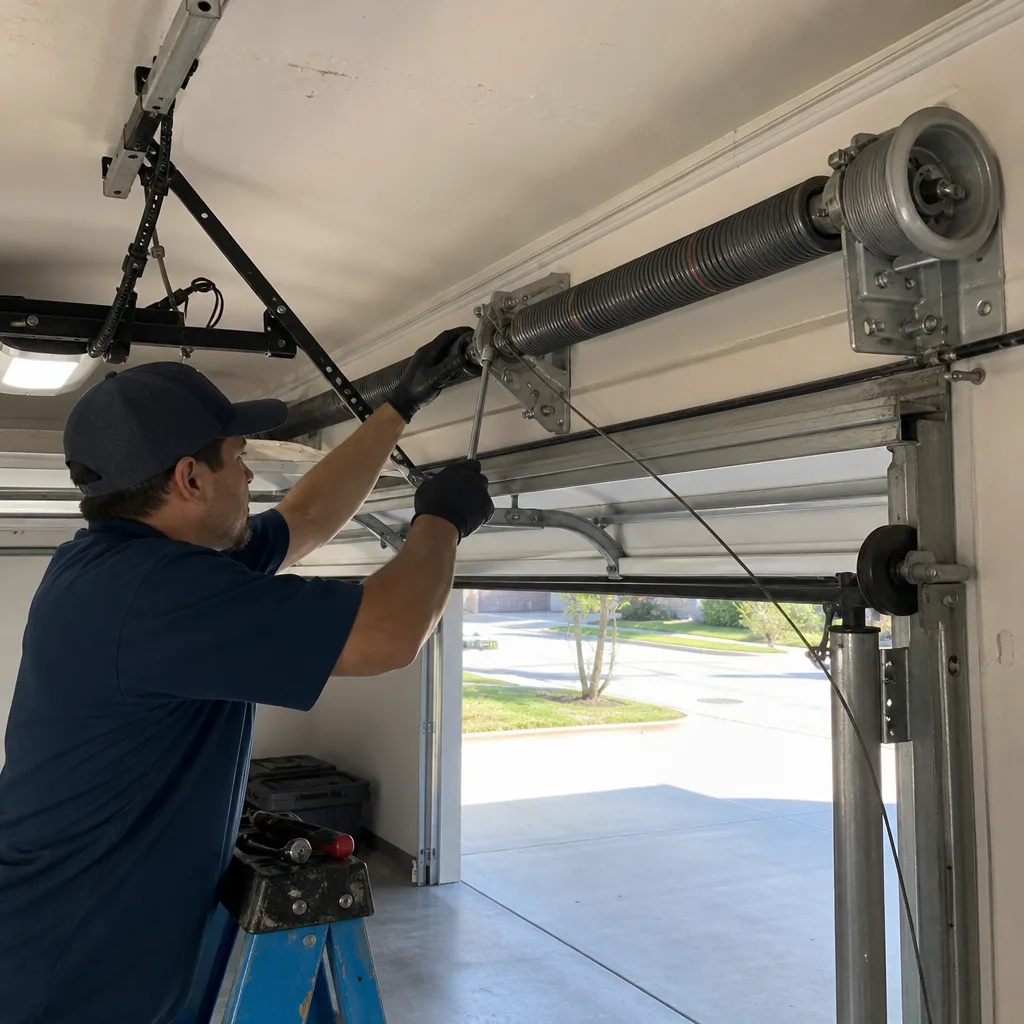
- Broken springs are not a DIY repair. The spring is under enormous tension. The winding and unwinding procedure is dangerous enough that we won’t walk you through it, and neither should anyone else. This is specifically why the safety warning exists.
Here’s a better way to think about it: you count miles on your tires and change them before they blow out on Preston Road. You count cycles on your garage door springs the same way. When we’re out on a service call in McKinney, we can look at your springs and tell you roughly how many cycles are left, just like reading tire tread. If the door doesn’t balance, that’s the first clue. If the springs are rusted or have visible gaps between coils, that’s a second clue. If they’re coming up on seven years old in Texas heat, that’s the third.
If you want to know what’s left on your springs, call us. We’ll tell you straight. We’re not interested in selling you springs you don’t need. We’re interested in not having you call us during a July heat wave because a spring snapped and the door is pinned shut with your car inside.
Common Mistakes to Avoid
- Spraying WD-40 on rollers, hinges, and springs. WD-40 cuts grease and displaces moisture. It leaves moving parts dry, and dry parts wear out in a fraction of the time. Use white lithium grease for lubrication, not WD-40.
- Greasing the tracks. The tracks are not lubricated surfaces. Keeping them clean and dry is the right call. Greasing them just makes the door collect the red clay dust that McKinney has plenty of.
- Skipping the auto-reverse test because “it worked last year.” Force settings drift, sensors get bumped out of alignment by kids on bikes, and logic boards fail. Test it monthly. It’s the cheapest, most important test on your door.
- Ignoring a popping sound from the spring. A popping spring is a spring telling you it’s dry, stressed, or near failure. Ignoring it means the first real indication you get of trouble is a loud bang and a door that won’t move.
- Replacing one spring when both are worn. The unbroken spring has the same cycle count as the broken one. Replacing one means the other fails next month, and you pay for two service calls instead of one.
- Using the garage door to wash the car or cool the house. Leaving the door open in summer doesn’t cool the garage much and invites every bug in Collin County inside. Opening and closing it repeatedly for driveway projects burns cycles on the springs.
- Waiting until something breaks to do maintenance. Every disaster calls in our book starts with a small, visible, fixable problem that was left alone for a year.
When to Call a Professional
There are jobs on this checklist you can do yourself, and there are jobs that require a trained pro with the right tools and a healthy respect for what a garage door can do. Call a professional if your door fails the auto-reverse test, if any cable shows fraying or fuzzy strands, if a spring is visibly broken or popping repeatedly, if the door has come off the track, or if the door doesn’t balance when you test it. These are not DIY categories. A door is 200 pounds riding on two springs, and when it lets go, it doesn’t give a warning. Opener repairs in McKinney are in the same category when the motor runs but the door doesn’t move, or when the opener makes a grinding noise and won’t cycle.
Beyond emergencies, call when you just want a set of trained eyes on the system. We do free estimates. Otto’s Garage Door home is right here in McKinney, and we’ve been in this county since 2004. The person who answers your call is the person who shows up, and the price quoted on the phone is the price written on the invoice. If you want a maintenance check-up, a spring cycle count, or a second opinion on a quote you already got, call us at (945) 777-4688.
Frequently Asked Questions
Monthly visual checks and reverse tests take under ten minutes. Full lubrication every six months, timed around spring and fall, covers the seasonal wear. The climate in McKinney is hard on rubber, metal, and lubricants, so twice-a-year deep maintenance keeps the system working between seasons.
A basic maintenance visit in McKinney typically runs from $75 to $150 depending on what needs adjustment or lubrication. If parts like rollers or cables need replacement, the total will be higher, but you will get the price for any repair quoted before work starts. Call (945) 777-4688 and Otto will tell you exactly what’s needed and what it will cost before the truck pulls in.
You can do the visual checks, tighten loose bolts, lubricate hinges and springs with white lithium grease, and test the auto-reverse with a 2×4. What you should not do yourself is anything involving the springs, cables under tension, or a door that’s come off the track. Those are the jobs where one wrong move causes serious injury.
McKinney follows the same federal safety requirements as the rest of Texas, including working auto-reverse on all openers manufactured after 1993. If you’re in an HOA community in McKinney, your HOA may also have rules about door appearance and replacement, especially in the historic district. Check your covenants before you replace a door, and call us if you’re not sure what your options are.
We service and install all major brands including LiftMaster, Chamberlain, Genie, Clopay, Amarr, Wayne Dalton, Craftsman, and Raynor. We carry parts for the common models in our trucks, which means most repairs in McKinney are done in a single visit.
No. The price quoted on the phone is the price written on the invoice. If we find something unexpected during the repair, we’ll show you the issue and get your approval before doing any work beyond the original quote. That’s our version of a handshake, and it’s been that way since 2004.
The Bottom Line
A garage door maintenance checklist for McKinney works best when it’s specific, not generic. For more guides & resources, explore our blog. Check the cables and bottom brackets monthly. Listen for popping and grinding. Test the auto-reverse every month with a 2×4, because it’s a safety issue, not a suggestion. Use white lithium grease, never WD-40. Count the cycles on your springs like miles on your tires. And when anything on the door fails, stops reversing, or starts making noise that wasn’t there last week, call someone who will give you a straight answer and a fixed price. Otto’s Garage Door has served McKinney since 2004. Call (945) 777-4688 and talk to a real person, any hour of the day, any day of the week.
Written by Otto Reinhardt, Owner at Otto’s Garage Door, serving McKinney since 2004.