
Last updated September 10, 2026
Full 25-point door and opener safety check with every visit - springs, cables, rollers, tracks, and your LiftMaster or Chamberlain opener included
You get a price before we start. It does not change when the truck arrives.
 Before
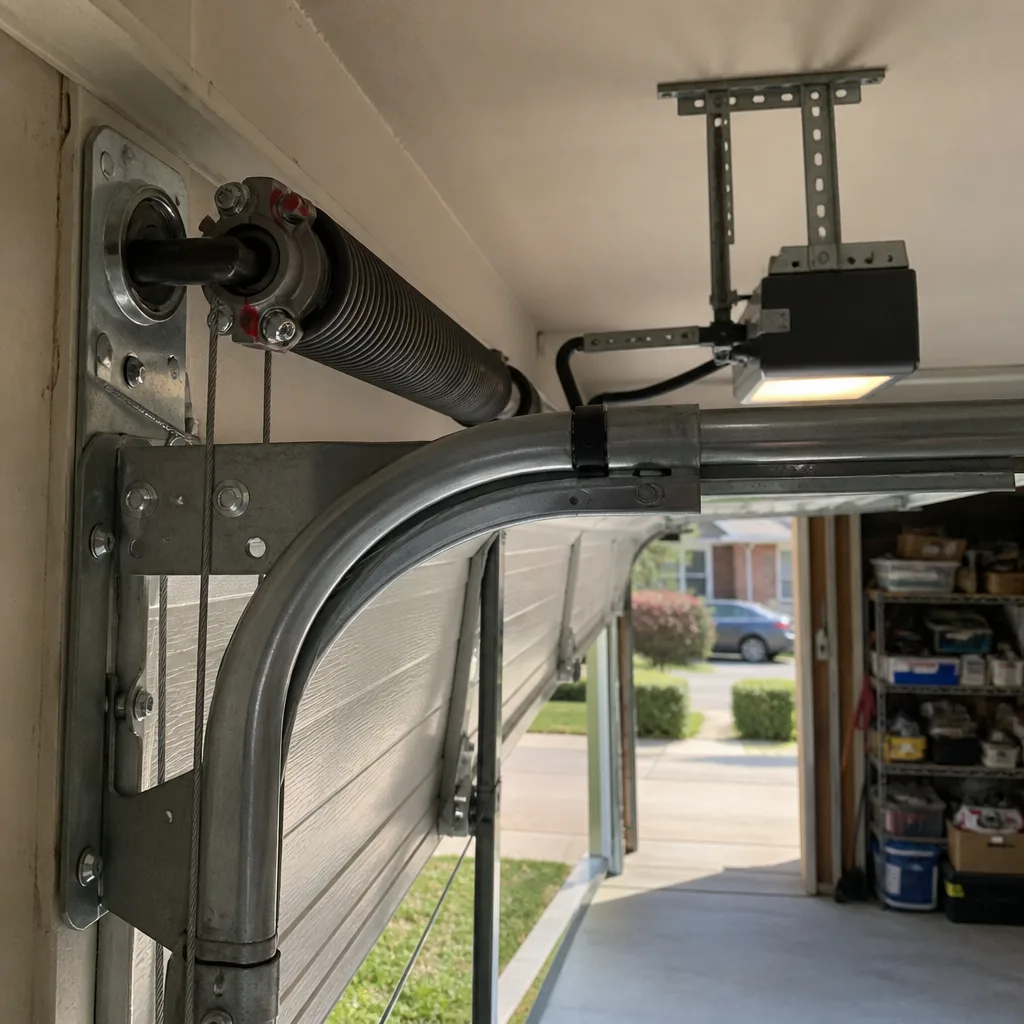 After
After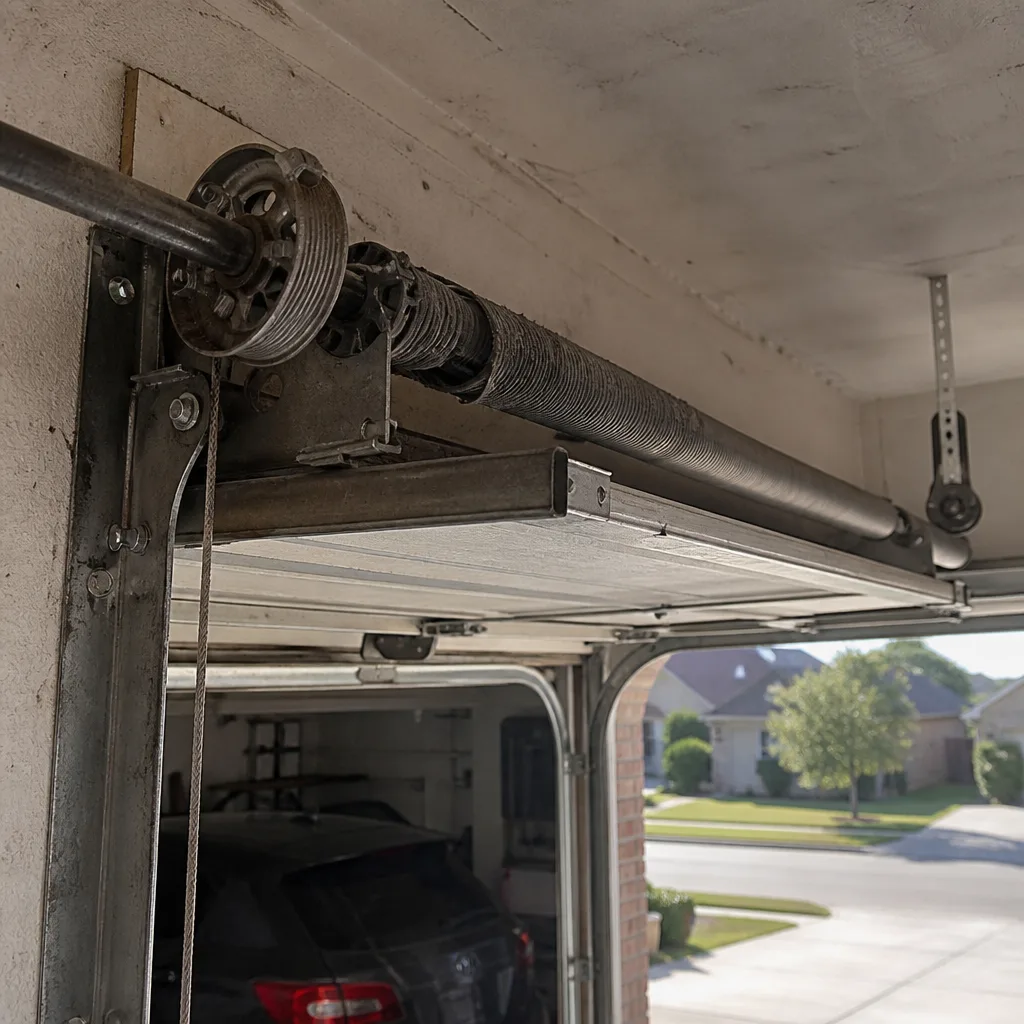 Before
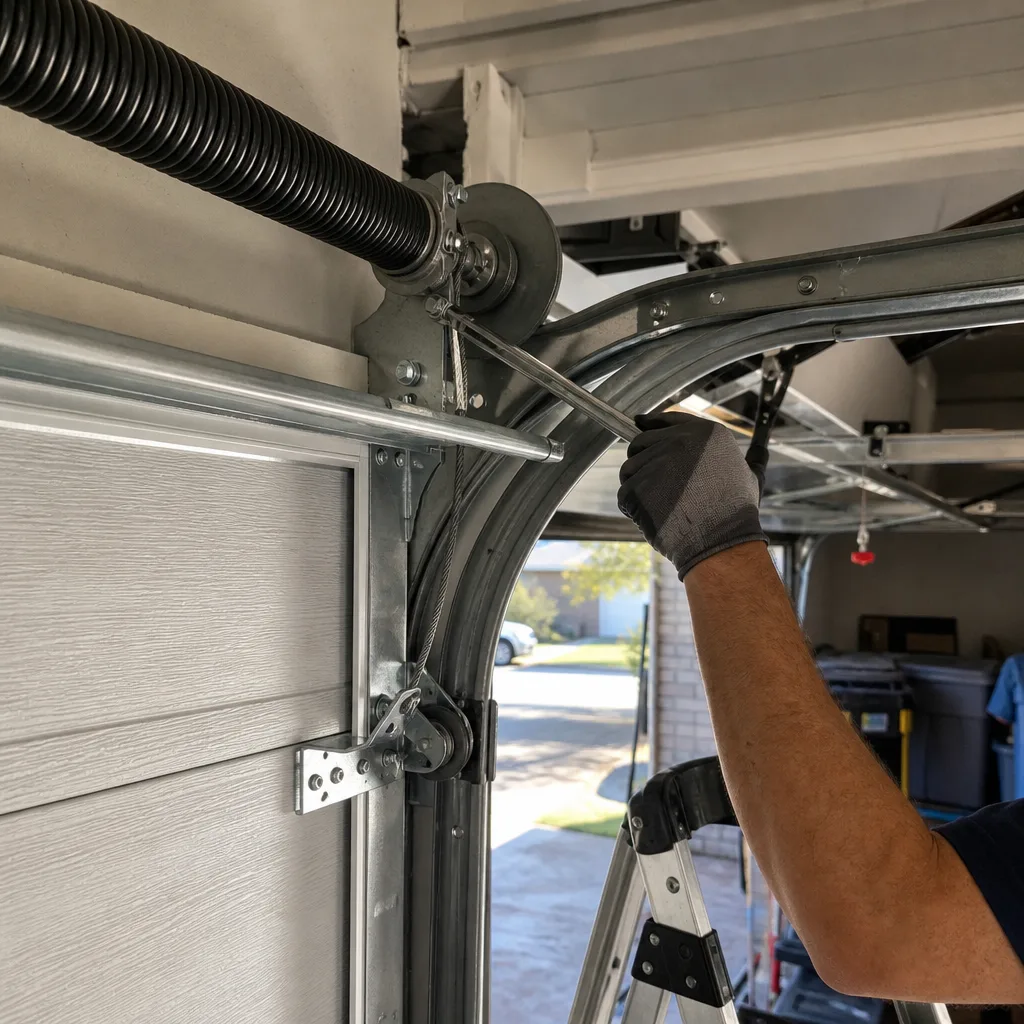 After
After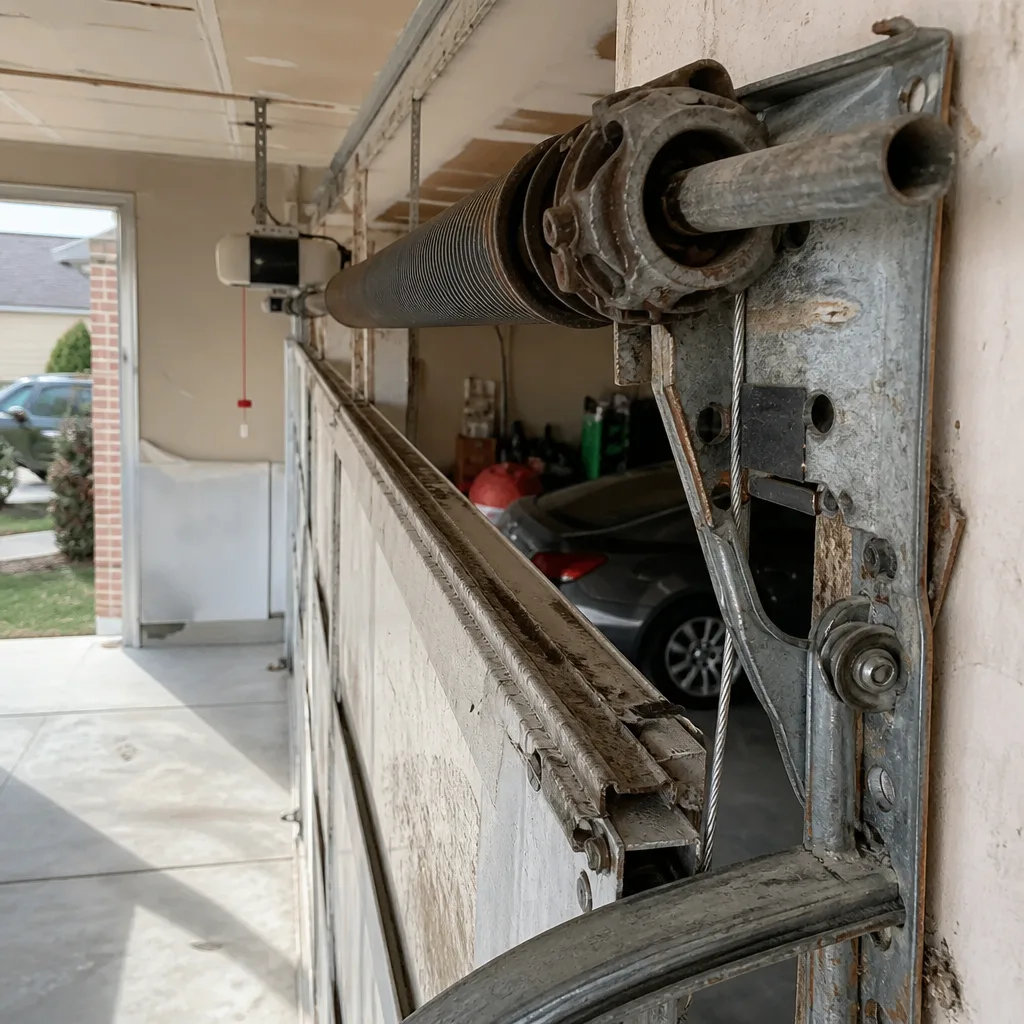 Before
 After
AfterSeasonal Garage Door Care for McKinney: Year-Round Homeowner’s Guide
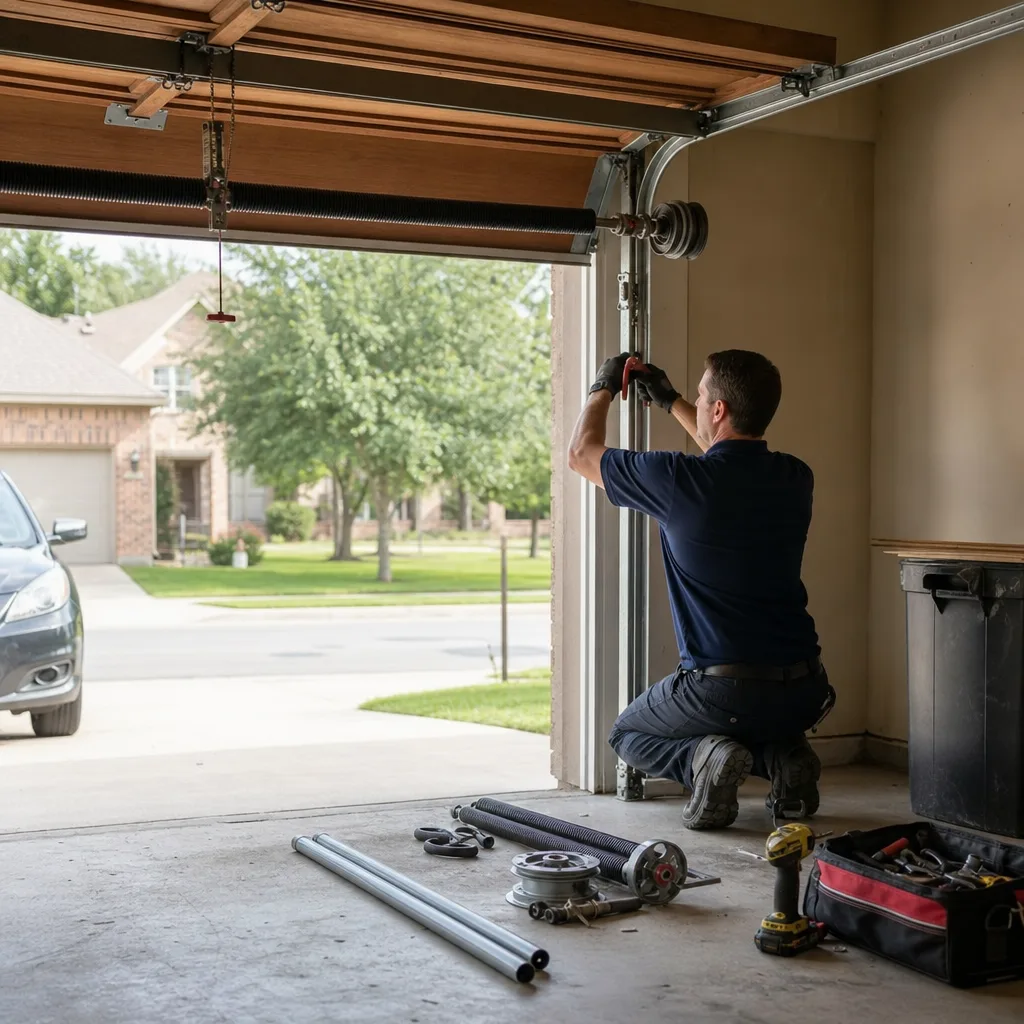
The week after an August heat wave is when torsion springs are most likely to fail in McKinney, not because they’re old, but because thermal expansion in the metal has been cycling hard for two months straight. Homeowners tend to think of garage doors as static, but the truth is a door is 200 pounds riding on two springs, and every degree of temperature change puts stress on that system. This guide walks you through what each McKinney season actually does to your garage door, what to check, and what to fix before it strands you or costs you a new door, and you can find more guides & resources on our blog. By the end, you’ll know the maintenance tasks that match the real conditions we get here, not the conditions a national how-to article assumes.
Quick Answer
Seasonal garage door care in McKinney comes down to four things: inspect springs and cables each fall, lubricate moving parts before every freeze and after every heat wave, check door alignment at the bottom corners as clay soil shifts through the year, and address hail or impact damage to panels within weeks, not months. A spring or cable check in the fall and a careful look at your door after every hard storm will prevent the vast majority of failures we see in McKinney homes, as detailed in The Complete Guide to Garage Door in McKinney.
Table of Contents
- Spring Storm Prep: Hail, Wind, and What It Means for Your Door
- Summer Heat: The Real Reason Springs and Openers Fail in August
- The Hard Freeze Protocol: What to Do When the Door Won’t Budge
- Fall Is the Right Time for Your Annual Spring and Cable Inspection
- Clay Soil Movement: The McKinney-Specific Problem Nobody Talks About
- Lubrication: What to Use, What to Avoid, and When It Matters
- Common Mistakes to Avoid
- When to Call a Professional
- Frequently Asked Questions
Spring Storm Prep: Hail, Wind, and What It Means for Your Door
McKinney sits squarely in hail alley. Spring storms roll through Collin County with hail that can range from pea-sized to golf-ball-sized, and your garage door is the largest surface on the front of your house. A door gauge of 24 or 25 is common on builder-grade doors, and that will dent under hail that leaves your roof shingles fine. A 26-gauge steel door, like many from Clopay or Amarr, offers better resistance, but even that will show impact marks from a serious North Texas storm.
After any hail event, walk the door and look at it in the low afternoon light. Dents you can see from the street are obvious, but small impact marks near the bottom panel are the ones that rust. The paint chips at the point of impact, water gets under the coating, and six months later you have a rust bloom spreading behind the finish. That rust will eventually weaken the panel and can corrode the hinge screws holding the door together.
Spring storm inspection checklist
- After any hail or high-wind storm, inspect each panel in raking light, especially the bottom two.
- Mark any new impact marks with a piece of painter’s tape so you can track changes.
- Check the weatherstripping at the bottom of the door for tears or displacement. A torn seal lets water and debris into the garage every time it rains.
- Rinse the door after a dust storm. Fine North Texas grit works into the rollers and hinges and grinds them down over time.
- Open and close the door manually once (pull the red emergency release) and listen. Grinding, squealing, or hesitation are signs something changed during the storm.
Wind matters too. A door that takes a direct 60-mph gust while open is a door that can twist in its tracks. We’ve seen McKinney doors in neighborhoods like Stonebridge Ranch and Eldorado come off their tracks after strong thunderstorms because the wind caught the door mid-cycle. If your door shakes or shudders when it runs after a storm, call someone before you keep cycling it. The damage only gets worse.
Summer Heat: The Real Reason Springs and Openers Fail in August
McKinney regularly sees stretches of 100°F or more in July and August, and the garage itself can push 120°F by late afternoon. That heat does two specific things to your door system. First, torsion springs expand and contract with every temperature swing between day and night. Each cycle is microscopic metal fatigue, and over a summer of 90-degree daily swings, that fatigue accumulates. The week after a brutal heat wave is when we get the most calls for broken springs in McKinney, because the spring has just been through weeks of maximum expansion and contraction. Second, the opener’s circuit board sits in a plastic housing on the ceiling of a 120-degree garage. Circuit boards are rated for a temperature range, and sustained heat above that range degrades solder joints and capacitors over time.
If your garage faces west or south, the afternoon sun hits the door directly, and the radiant heat off a concrete driveway can push the air around the opener to 130°F or more. That shortens the life of a LiftMaster or Genie opener by years in McKinney if the garage isn’t ventilated. Shade helps. A tree or an awning that keeps direct sun off the door can lower the surface temperature by 20 degrees, and that’s enough to make a measurable difference in spring lifespan. If you can’t shade the door, cracking the garage door a few inches in the late afternoon or installing a garage vent in the wall will help move hot air out before it cooks your opener’s board.
When the heat is at its worst, listen to your opener. If it’s straining, the problem is almost never the opener. A hot garage makes springs expand, which changes the balance of the door, which forces the opener to work harder against a door it was calibrated to lift at a cooler temperature. The opener is the symptom; the spring tension is the cause. Before you replace an opener that seems sluggish in August, have someone check the door balance.
The Hard Freeze Protocol: What to Do When the Door Won’t Budge
McKinney winters are mild except for a few nights a year when the temperature drops into the teens and catches everyone off guard. That’s when we see the freeze-lock problem: condensation or meltwater has frozen the bottom seal to the concrete apron, and the opener tries to lift a door that’s glued to the driveway. The opener’s motor strains, the belt or chain slips, and in bad cases, the opener’s internal gears strip or the door panel buckles at the bottom.
The rule is simple: if the door won’t move, don’t force it. Don’t hold the opener button down, don’t hit it with a hammer, and don’t pour hot water on the seal. The hot water will refreeze and make the bond worse. What you do is this:
- Check the bottom of the door for visible ice between the seal and the concrete.
- If you see ice, pull the red emergency release cord so the opener is no longer trying to lift.
- Gently tap the bottom edge of the door with a rubber mallet, not a metal hammer, to break the ice bond.
- Once the door moves an inch, you can run the opener again. If it still won’t move, leave it and call someone rather than forcing it.
- After the door is free, wipe the bottom seal dry and apply a thin coat of silicone or lithium grease to the seal so subsequent freezes don’t stick as easily.
The better move is prevention. Before a predicted freeze, apply a light coat of spray lubricant to the bottom seal and the weatherstripping along the sides. The lubricant creates a barrier that water can’t bond to, and the door is far less likely to freeze shut. We also tell McKinney homeowners to keep the garage a few degrees warmer during a hard freeze if they can. An unheated garage in the teens is a different animal than one that holds at 35°F.
Fall Is the Right Time for Your Annual Spring and Cable Inspection
If you do one maintenance thing a year for your garage door in McKinney, do a spring and cable inspection in October or November. The mechanical logic is straightforward: your springs carry the entire weight of the door, and they’re under maximum stress when the temperature drops. Cold metal contracts, which increases the effective tension on a spring that’s already loaded. A spring that’s near the end of its cycle life will often survive a hot summer and fail on the first cold snap in December or January. Inspecting in the fall gives you a chance to replace a tired spring before the cold stress pushes it to failure, and it puts the repair in a season when you’re not standing in a freezing garage at 9 p.m. waiting for someone to come out.
Here’s what to look for, in order:
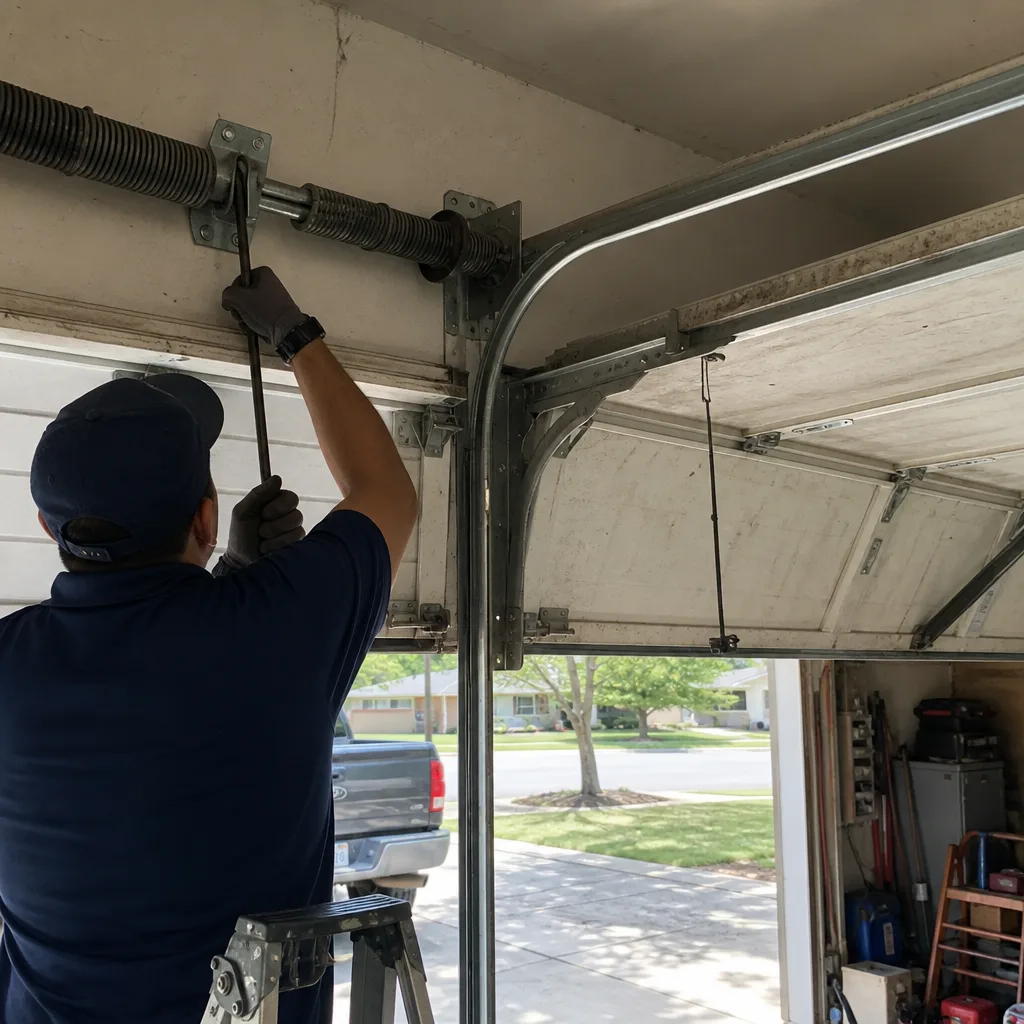
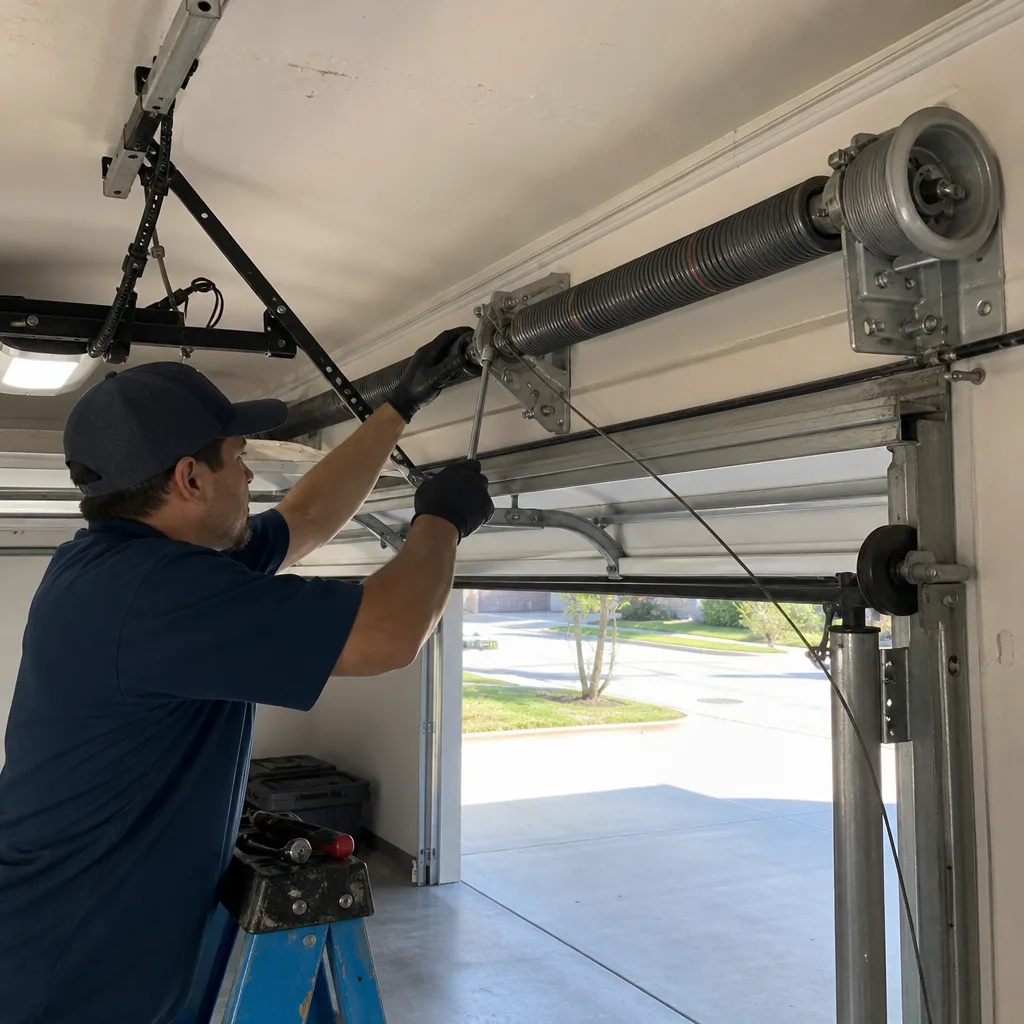
- Look at the torsion spring above the door, if that’s the type you have. A spring that shows a visible gap in its coils, or a spring that looks stretched or has a thin layer of rust, is a candidate for replacement.
- Look at the lift cables on both sides of the door. Frayed strands, kinks, or cables that are anything but straight are a problem. A cable that lets go while the door is halfway up drops the full weight of the door onto whatever is under it.
- Check the cable drums at the top corners. The cables should wind neatly and evenly. Uneven winding means the door is going up crooked.
- Pull the emergency release and run the door up and down by hand. A door that’s properly balanced should stay where you put it. If it drops, the spring is tired. If it shoots up, the spring is over-wound, which is less common but equally dangerous.
- Check all the roller hinges along the sides of the door. Look for cracks, worn bushings, or hinges that seem loose.
I count spring cycles the way you count tire miles. A standard torsion spring is rated for about 10,000 cycles, but many builder-installed springs are only rated for 5,000. If your McKinney door goes up and down twice a day, that’s about 730 cycles a year. A 10,000-cycle spring is a ten-year part; a 5,000-cycle spring is a five-year part. If your door is original to a house built in 2008 or earlier, your springs are either done or on borrowed time. I will tell you what’s left on yours.
Clay Soil Movement: The McKinney-Specific Problem Nobody Talks About
The soil in McKinney and across much of Collin County is expansive clay. It swells when it’s wet and shrinks when it’s dry, and it moves enough to crack foundations, heave sidewalks, and shift the concrete apron your garage door sits on. That movement doesn’t happen evenly. One side of the driveway can drop a quarter-inch while the other stays put, and that quarter-inch is enough to throw your garage door’s track alignment off over time.
The signs show up at the bottom corners of the door first. When the concrete apron has shifted relative to the door frame, the bottom seal will show uneven wear, with the seal compressed hard on one side and gapped on the other. You’ll see daylight under one corner when the door is closed, and that’s also where bugs, water, and field mice get in. Less obviously, the door will start to hang slightly crooked when it’s open, because the track on the low side is now working against the door instead of with it.
Here’s what to look for at the bottom corners twice a year, in spring and fall:
- Stand inside the garage with the door closed and look at the bottom corners. Is light sneaking under one side more than the other?
- Run your hand along the bottom seal. Is it worn flat on one side and like new on the other?
- Open the door halfway and look at it from inside. Does the bottom rail sit level, or is one side an inch lower than the other?
- Close the door and watch the gap between the door and the side track on both sides. Is it wider at the top on one side and wider at the bottom on the other?
If you see any of these, the fix is usually a track adjustment or a re-shimming of the bottom bracket, not a new door. But catching it early is the difference between a service visit and a new set of tracks. In McKinney, where the soil is moving under every house all year long, this is an annual check, not a one-time thing.
Lubrication: What to Use, What to Avoid, and When It Matters
Lubricating a garage door in McKinney is mostly about timing. The heat and dust of summer dry out lubricant faster than anything, and the freeze risk of winter means the bottom seal needs a barrier coat before a cold front. The rule I follow is simple: lubricate in early fall, lubricate again in early spring, and once more before any hard freeze if the weather service is calling for teens overnight.
What you use matters as much as when. Use a garage-door-specific spray lubricant or a lithium-based spray. What you want is something that penetrates the hinge pins and roller bearings and then leaves a thin film that doesn’t attract dust. Silicone spray works too, and it’s good on the weatherstripping and bottom seal because it won’t break down the rubber. What you don’t want is WD-40. WD-40 is a solvent and rust remover, not a lubricant, and it will wash out whatever lubricant is already in the hinge. Use it to clean a rusty part if you want, but follow it with actual lubricant.
Here’s where the lubricant goes, in order:
- Hinge pins along the sides, top and bottom on each panel. A short spray into the pin joint, not a soaking.
- Rollers, if they’re steel rollers with bearings. If they’re nylon rollers, spray the bearing area only. If they’re plastic rollers, a light shot on the stem.
- The torsion spring itself. A light coat along the entire length of the coil, not a coating on the cones.
- The cable and cable drums. A short spray so the cable slides smoothly in the drum.
- The bottom seal and side weatherstripping, with silicone spray only.
Skip the belt or chain on the opener. A belt is designed to run dry, and oiling it just attracts grit that grinds the belt surface. A chain needs a thin film of specific chain lubricant once a year, and most homeowners are better off leaving it alone than spraying the wrong thing on it. If the chain is loud, the problem is usually tension or sprocket wear, not a lack of oil.
Common Mistakes to Avoid
- Forcing a frozen door open. If the bottom seal is frozen to the apron and you hold the opener button, you’re risking a stripped opener gear or a buckled bottom panel. Break the ice bond first, gently, or leave it and call someone.
- Ignoring hail dents until they rust. A dented panel is a rust problem waiting to happen in McKinney’s humidity, and once rust breaks through the coating, you’re replacing a panel instead of touching up paint. Inspect after every hail event, not just the ones that break windows.
- Lubricating with WD-40. It cleans, which is useful, but it doesn’t lubricate, and it washes out the lube that was already there. Use a lithium or silicone spray and put it where the manual says, not everywhere the can reaches.
- Replacing the opener when the door is unbalanced. A sluggish opener in August is usually a door that’s out of balance because the heat changed the spring tension. Fix the balance before you spend $400 on a new opener.
- Waiting until the spring breaks to think about the spring. Springs have a cycle life, not a calendar life, and they fail when it’s most inconvenient, which in McKinney is usually the first cold snap after a hot summer. An October inspection costs less than a 9 p.m. emergency call in January.
- Adjusting the track alignment yourself. The bottom brackets and track bolts are under tension from the springs. Loosening the wrong bolt can release the spring tension into the bracket, and that’s a visit to the emergency room. Leave track work to someone who does it daily.
- Skipping the annual bottom-corner check. McKinney’s clay soil never stops moving, and a door that’s out of alignment by half an inch will wear through its rollers and tracks years before it should. The check is free and takes thirty seconds.
When to Call a Professional
Call someone the day you notice a broken torsion spring or a frayed lift cable, because the door is holding weight on whatever’s left, and whatever’s left isn’t enough. Call if the door is shaking in its tracks, if it won’t stay in place when you run it manually, if the cable has jumped the drum, or if you see a gap in the spring coil. These are not DIY repairs, a point we cover in depth in our DIY vs Professional Garage Door: The McKinney Homeowner’s Decision Guide. A door is 200 pounds riding on two springs, and the springs are under enough tension to take a finger off. Some things you can fix with a can of lubricant and a rubber mallet. Some things you call a professional for before the door comes down on your car or your shoulder.
Otto’s Garage Door offers free estimates in McKinney, call (945) 777-4688 and Otto will tell you over the phone what he thinks is wrong and what it’ll cost, and he holds that number when he gets there. If you already have a written estimate from another company, bring it, and Otto will give you a free second opinion, no trip charge inside the county.
Frequently Asked Questions
Twice a year at minimum, once in early fall and once in early spring, plus one extra application before any hard freeze that’s expected to drop below 20°F. The extra freeze application goes on the bottom seal and side weatherstripping with silicone spray, not on the hinges. Call (945) 777-4688 if you’re not sure what to use, and someone will tell you before you buy the wrong can.
Because McKinney’s summer heat cycles the spring metal every day, expanding it at 105°F and contracting it at 75°F overnight, and that daily cycling is the equivalent of thousands of extra open-close cycles over a two-month hot spell. The week after a heat wave is the most common time for spring failures in McKinney homes, especially on doors where the spring was already past half its life.
Yes, and it depends on the door gauge and the hail size. Golf-ball hail will dent a 25-gauge door badly enough that multiple panels need replacement, and when the damage is a complete pattern across the door, a new door from someone like Wayne Dalton or Clopay often costs less than replacing panels one at a time. Call (945) 777-4688 for a look before you file a claim, because an honest repair bill is sometimes less than the deductible.
Apply a thin coat of silicone spray to the bottom seal and side weatherstripping before a hard freeze, and keep the garage a few degrees warmer than outside if you can, even a small space heater on low helps. If the door does freeze shut, pull the red release cord, tap the bottom edge with a rubber mallet to break the ice, and never force the opener.
Check the torsion spring for gaps or rust, check the lift cables on both sides for fraying, run the door manually to test the balance, and look at the bottom corners for uneven wear from clay soil movement. That’s the entire fall inspection, and it catches most of what will fail in the winter before it strands you. Call (945) 777-4688 for a free inspection if you’d rather have Otto look at it.
Yes, and more than most homeowners realize. The soil expands when wet and shrinks when dry, shifting the concrete apron the door sits on, and that throws the track alignment off gradually until the door starts hanging crooked and wearing its rollers unevenly. Look at the bottom corners twice a year, and if the wear is uneven, the fix is usually a track adjustment, not a new door.
A seasonal tune-up that includes spring inspection, cable check, track alignment, and full lubrication typically runs $85 to $150 in McKinney depending on what’s found, and the price is quoted and agreed before any work starts, not after, as explained in our Garage Door Cost Breakdown: The McKinney Homeowner’s Reference for 2026. Otto’s Garage Door never revises a quote at the door, and seniors and veterans always get 10% off. Call (945) 777-4688 for an exact number.
The Bottom Line
McKinney’s climate does specific things to garage doors: summer heat kills springs and opener boards, spring hail dents panels into rust, winter freezes lock doors to the concrete, and clay soil shifts the whole system out of alignment all year long. The maintenance that matters is boring and specific. Lubricate before freezes and after heat waves. Inspect springs and cables every fall. Look at the bottom corners every spring and fall. Fix hail dents before they rust. And when something’s beyond what you can do with a can of silicone and a rubber mallet, call someone whose name is on the van and on the license, not someone reading from a call center script three states away. Otto’s Garage Door has been in McKinney since 2004, and Otto answers the phone himself. Call (945) 777-4688.
Written by Otto Reinhardt, Owner at Otto’s Garage Door, serving McKinney since 2004.